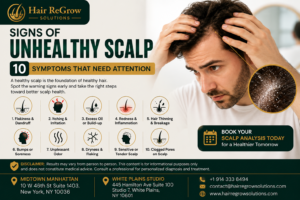
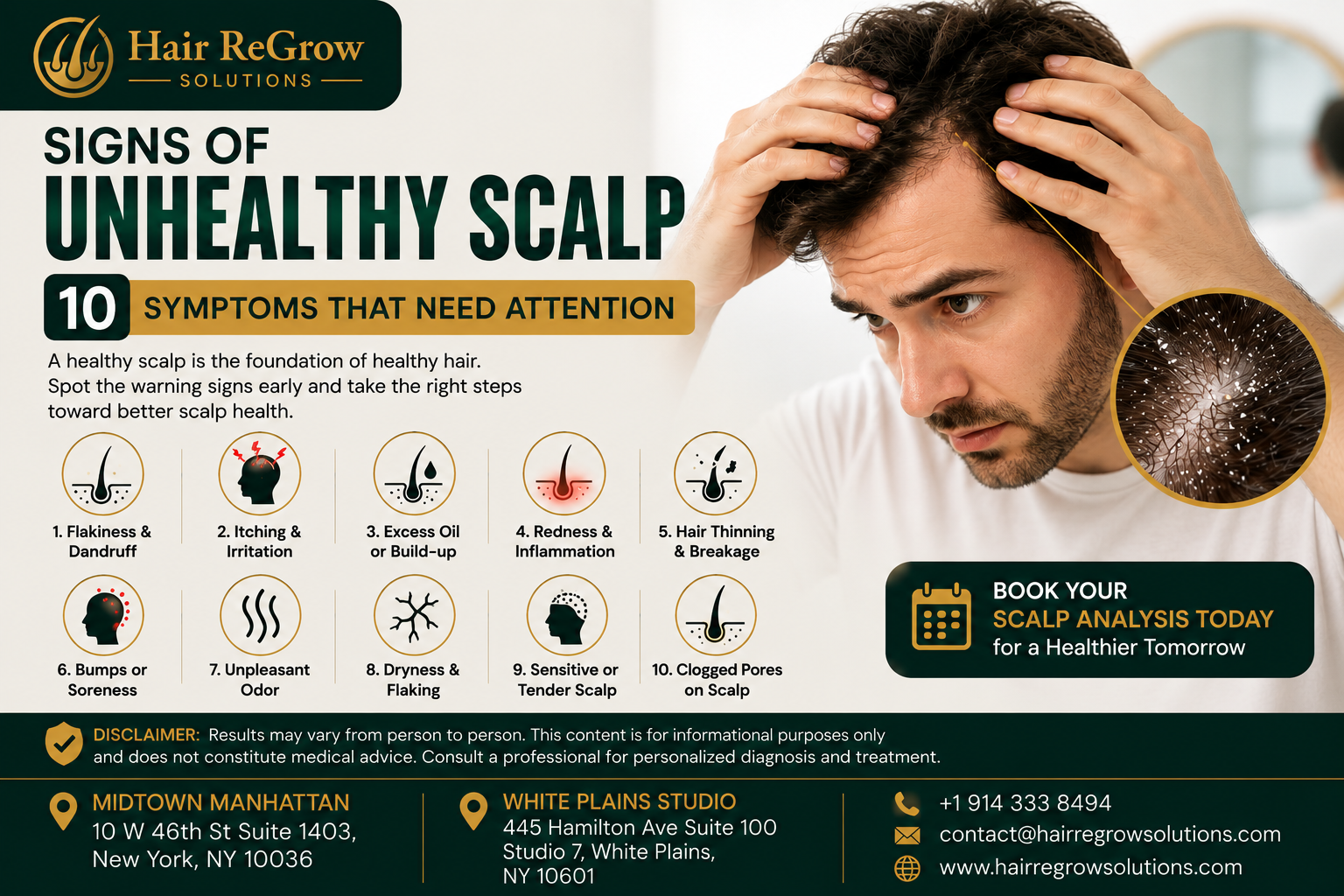

Signs of Unhealthy Scalp can appear long before significant hair loss becomes noticeable. Symptoms such as persistent itching, dandruff, redness, excess oil, scalp tenderness, or unusual shedding are often early indicators that your scalp may not be as healthy as it should be. Recognizing these warning signs early can help you address the underlying issue before it begins affecting the quality and strength of your hair.
If you have noticed more shedding, itching, flakes, or a scalp that feels “off,” you are not alone. Many people begin searching for answers when their hair appears thinner than usual or when scalp discomfort becomes difficult to ignore. In many cases, the real question is not just,
“Why is this happening?” but also, “Could my scalp be part of the problem?”
A scalp that is inflamed, overly dry, excessively oily, irritated, or affected by product buildup can influence both scalp health and the hair growth cycle. While some symptoms are easy to recognize, others develop gradually and may be overlooked until they become more noticeable.
In this guide, you’ll learn the 10 signs of unhealthy scalp, what these symptoms may indicate, how they can affect hair growth, the common conditions associated with poor scalp health, and when a professional scalp analysis may be the right next step.
Signs of an Unhealthy Scalp and How It Affects Your Hair
Why scalp health matters for hair growth
Your scalp is the foundation for hair growth. Hair follicles live in the scalp, and when the scalp environment is not balanced, follicles may not function at their best.
A healthy scalp typically has:
- Balanced oil production
- Minimal irritation
- Good circulation
- Low buildup
- A comfortable skin barrier
When that balance is disrupted, you may notice symptoms like itching, flakes, tenderness, redness, excessive oiliness, or shedding. These unhealthy scalp signs do not always mean permanent hair loss, but they can signal that something is affecting the scalp environment.
Hair can respond to scalp issues in different ways. It may shed more than usual, become weaker at the root, look less dense, or feel dry and brittle. In some cases, scalp symptoms and hair thinning happen together, which is why looking at the scalp and hair as a connected system is important.
Common signs of an unhealthy scalp
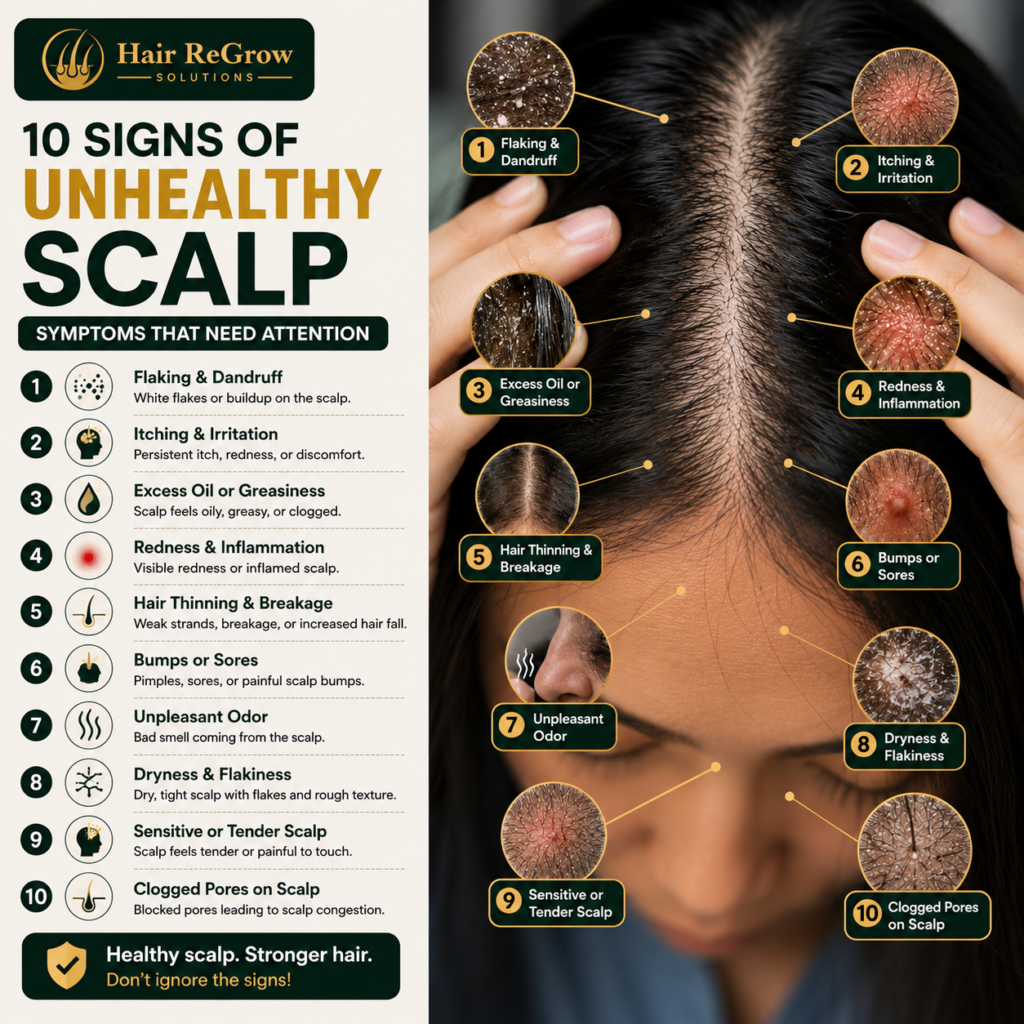
1. Itching that does not go away
An itchy scalp is one of the most common signs people notice first. Occasional itchiness can happen from weather, product residue, or dryness. But ongoing itch may point to irritation, sensitivity, inflammation, or buildup.
Possible causes include:
- Dry scalp
- Product reactions
- Dandruff or seborrheic dermatitis
- Excess oil and yeast imbalance
- Scalp psoriasis
- Tight hairstyles or friction
If itching leads to scratching, it can further irritate the scalp and make shedding worse. Frequent scratching may also damage the skin barrier, which can create a cycle of more irritation.
2. Flaking or visible scale
Flakes are often associated with dandruff, but they can also appear with dry scalp, irritation, or more inflammatory scalp conditions. The appearance of the flakes matters.
- Small, dry flakes often suggest dryness
- Greasy, yellowish flakes may suggest excess oil or seborrheic dermatitis
- Thick, persistent scale may warrant professional evaluation
Flaking does not always cause hair loss directly, but the discomfort, inflammation, and scratching that often come with it can affect scalp wellness and hair appearance.
3. Redness or visible inflammation
Redness is one of the clearest signs of scalp inflammation. It may appear as diffuse pinkness, patchy redness, or irritated areas around the hairline, crown, or part line.
Inflammation can be triggered by:
- Harsh hair products
- Heat styling
- Chemical services
- Chronic dandruff
- Scalp psoriasis
- Folliculitis
- Allergic reactions
Inflamed scalp skin may not support healthy growth conditions as well as calm, balanced skin. If redness is paired with tenderness, burning, or shedding, it may be worth taking seriously.
4. Tenderness or scalp soreness
A scalp that feels sore when touched, brushed, or styled is not something to ignore. Tenderness can happen when the scalp is irritated or inflamed, but it may also be linked to tight braids, extensions, protective styles, frequent tension, or follicle stress.
Some people notice:
- Pain during washing
- Discomfort when tying hair up
- Soreness in one area of the scalp
- Burning or stinging sensations
This symptom can be especially important if it is new or localized. A tender scalp sometimes signals that the skin barrier is compromised or that the follicles are under stress.
5. Excessive oiliness
An oily scalp is not always unhealthy, but when oil builds up quickly or feels difficult to control, it may create problems. Excess sebum can contribute to buildup, itching, odor, and a heavier scalp feel.
An oily scalp may also:
- Make hair look flat faster
- Trap debris and styling products
- Contribute to clogged follicles in some people
- Create a favorable environment for flaking or irritation
On the other hand, over-cleansing an oily scalp can make the problem worse by stripping natural oils and causing rebound oil production.
6. Persistent dryness or tightness
Dry scalp often feels tight, rough, or uncomfortable. It may flake and itch, especially in colder weather or after using strong shampoos and treatments.
Possible contributors include:
- Over washing
- Harsh cleansers
- Low humidity
- Chemical processing
- Aging changes in scalp oil production
- Skin conditions such as eczema
Dry scalp can affect hair by making it appear dull, fragile, or less manageable. While dryness alone does not always cause major shedding, a compromised scalp barrier can contribute to discomfort and breakage.
7. Unusual shedding or widening part
Many people first suspect a scalp issue when they notice more hair in the shower, on a pillow, or in a brush. Shedding can happen for many reasons, including stress, seasonal changes, hormonal shifts, nutritional factors, and scalp inflammation.
A widening part, reduced ponytail density, or visible scalp through the crown can suggest that hair is becoming less dense. If these changes happen along with itching, flaking, or redness, the scalp may be part of the explanation.
8. Buildup or clogged feeling on the scalp
Product buildup can happen from shampoos, conditioners, dry shampoo, oils, gels, and styling sprays. In some people, buildup creates a coated, uncomfortable scalp that feels difficult to clean.
Signs may include:
- Hair that feels dirty soon after washing
- A waxy or coated scalp
- Increased itching
- Flat, heavy roots
- Dull looking hair
Buildup can interfere with scalp comfort and may make it harder to assess what is really happening with the skin and follicles.
9. Burning, stinging, or tingling
A burning or stinging scalp often suggests irritation or sensitivity. This can occur after product use, heat styling, chemical treatments, or exposure to active ingredients that the scalp does not tolerate well.
This symptom should not be brushed off if it persists. It may indicate that the scalp barrier is stressed or that a product is not suitable for your skin.
10. Pimple like bumps or follicle irritation
Small bumps on the scalp can be caused by folliculitis, clogged follicles, friction, or product occlusion. Sometimes they are itchy or sore, and sometimes they are noticed only by touch.
When bumps appear with shedding, pain, or ongoing redness, a professional assessment can be helpful. The goal is not to self diagnose, but to better understand whether the concern is cosmetic, inflammatory, or something that needs medical attention.
How unhealthy scalp signs can affect hair
Scalp issues can influence hair in several ways:
- They can increase shedding
- Inflammation, irritation, and stress on follicles may contribute to more hair falling out than usual.
- They can weaken the hair environment
- When the scalp is too dry, too oily, or consistently inflamed, follicles may not be in the best condition for healthy growth.
- They can make hair look thinner
- Even if growth is still happening, buildup, breakage, and reduced volume can create the appearance of thinning hair.
- They can increase breakage
- A dry or inflamed scalp may lead to fragile hair shafts, especially if the scalp barrier is compromised and hair care habits are not adjusted
- They can make styling harder
- An uncomfortable scalp can affect how often you wash, brush, or wear your hair. That can influence both appearance and maintenance.
Common causes behind unhealthy scalp signs
There is no single cause of scalp problems. More often, several factors work together.
Hair care habits:
- Over washing
- Under washing
- Harsh shampoos
- Heavy product use
- Frequent dry shampoo
Scalp conditions:
- Dandruff
- Seborrheic dermatitisS
- Psoriasis
- Eczema
- Folliculitis
Styling and chemical stress:
- Tight hairstyles
- Extensions
- Frequent heat use
- Bleaching or coloring
- Chemical relaxers
Lifestyle and environmental factors:
- Stress
- Sleep issues
- Weather changes
- Humidity
- Diet and hydration
Hormonal or internal factors:
- Postpartum changes
- Thyroid issues
- Iron deficiency
- Androgen related thinning
- Other health changes
If scalp symptoms and hair thinning happen together, identifying the root cause becomes especially important before choosing a treatment path.
what different scalp symptoms can suggest
| Symptom | Possible meaning | Hair impact | When to pay attention |
|---|---|---|---|
| Itching | Dryness, irritation, dandruff, sensitivity | Scratching can worsen shedding and breakage | If persistent or severe |
| Flaking | Dry scalp or inflammatory scalp condition | May affect comfort and appearance | If flakes are greasy, thick, or recurring |
| Redness | Inflammation or irritation | Follicles may be under stress | If paired with soreness or burning |
| Oiliness | Excess sebum or product buildup | Hair may look flat and scalp may feel clogged | If washing does not control it |
| Dryness | Low moisture or barrier disruption | Hair may feel brittle or dull | If accompanied by tightness or flaking |
| Tenderness | Friction, inflammation, or follicle stress | Can signal scalp strain | If styling becomes painful |
| Shedding | Many possible causes, including scalp inflammation | Reduced density or visible thinning | If shedding is ongoing or sudden |
When to compare treatment options
If you are dealing with unhealthy scalp signs, the best option depends on the underlying issue. A scalp that is dry needs a different approach than one that is oily, inflamed, or buildup prone.
Gentle home care may be enough when:
- Symptoms are mild
- The issue seems linked to product use or routine
- There is no pain, heavy scaling, or obvious hair loss
Professional guidance may be better when:
- Symptoms persist beyond a few weeks
- Hair thinning is increasing
- The scalp is painful, very red, or very flaky
- You have tried multiple products without improvement
Non surgical options may be considered when:
- Hair thinning is related to scalp environment, stress, or early stage shedding
- You want a supportive, consultation driven approach
- You are looking for evidence informed care without surgical intervention
Options such as scalp analysis, hair and scalp wellness programs, growth factor treatments – Scalp Detox & Rejuvenation , LLLT – Laser Hair Wellness Therapy, and SMP – Scalp Micro pigmentation may be discussed depending on the concern and goals. Not every option is right for every person, and durability, maintenance, comfort, and expected outcomes can vary.
Professional Insight
A professional scalp or hair assessment may be beneficial when symptoms are ongoing, confusing, or starting to affect density. This is especially true when more than one sign is present, such as itching plus shedding, or redness plus flaking.
A consultation can help identify whether the issue is primarily dryness, buildup, inflammation, styling stress, or something more complex. That matters because treating the wrong problem can delay progress. For example, a scalp that needs calming may not respond well to heavy products, and an oily scalp may not benefit from adding more occlusive treatments.
A scalp first approach focuses on understanding the environment before recommending a solution. That creates a more informed path forward and helps people choose options that match their needs rather than guessing.
Conclusion
Unhealthy scalp signs are easy to overlook at first, but they often provide important clues about what is happening with your hair and scalp. Itching, flakes, redness, tenderness, oiliness, dryness, buildup, burning, and shedding can all point to an imbalance that deserves attention.
The most important takeaway is that scalp symptoms are not random. They can help reveal whether the issue is related to irritation, inflammation, moisture balance, product use, styling stress, or another underlying factor. When hair thinning is part of the picture, identifying the root cause before choosing a solution is the most practical next step.
Frequently Asked Questions
What are the most common unhealthy scalp signs?
The most common unhealthy scalp signs include itching, flaking, redness, tenderness, excessive oiliness, dryness, buildup, burning, and unusual shedding. Not everyone will experience the same combination, and symptoms can overlap.
Can an unhealthy scalp cause hair loss?
An unhealthy scalp can contribute to increased shedding, breakage, or the appearance of thinning hair. It does not always mean permanent hair loss, but ongoing scalp inflammation or irritation can affect hair health over time.
Is dandruff the same as dry scalp?
No. Dry scalp usually causes small, dry flakes and a tight feeling, while dandruff often involves oilier flakes and may be linked to seborrheic dermatitis. Both can cause itching, but they are not the same issue.
Why does my scalp itch but my hair looks fine?
An itchy scalp can happen even before visible hair changes appear. It may be due to dryness, product buildup, sensitivity, or a scalp condition that has not yet affected hair density.
When should I get a scalp analysis?
A scalp analysis is helpful if you have persistent symptoms, unexplained shedding, or hair thinning that is not improving with routine changes. It can help clarify what may be driving the concern.
Can oily scalp and hair thinning happen together?
Yes. An oily scalp can coexist with hair thinning, especially if buildup, inflammation, or over washing is part of the picture. The scalp environment should be evaluated rather than assuming oil alone is the problem.
Do scalp treatments work for everyone?
No single treatment works for everyone. Results depend on the underlying cause, consistency, and individual scalp condition. That is why personalized assessment matters before choosing a plan.
Struggling with Hair Loss?
If you are noticing ongoing scalp discomfort or changes in hair density, a personalized scalp analysis can help bring clarity. Hair ReGrow Solutions takes a consultation driven, scalp first approach to understand the root causes and explore non surgical options that fit your needs.
Book Free Consultation →