
If you’ve been dealing with hair thinning, shedding, or a receding hairline, you may have wondered:
Is there a way to restore hair without surgery?
The answer is yes. In 2026, non-surgical hair restoration has become more advanced, accessible, and effective than ever. These treatments focus on stimulating your existing follicles, improving scalp health, and creating the appearance of fuller hair all without incisions, stitches, or long recovery times.
Whether you’re in the early stages of loss or looking for a natural looking boost, non-surgical options can slow progression, thicken hair, or add visual density. In this post, we’ll explain what these treatments really involve, how they work, realistic expectations, and why a personalized approach makes the biggest difference
What Non-Surgical Hair Restoration Actually Means?
Unlike hair transplants (which move follicles from one area to another), non surgical methods work with what you already have:
- Stimulate dormant follicles to re-enter the active growth phase.
- Improve blood flow, nutrient delivery, and the overall scalp environment.
- Reduce inflammation or block the hormonal effects that cause hair miniaturization.
- Create optical illusions of density when needed.
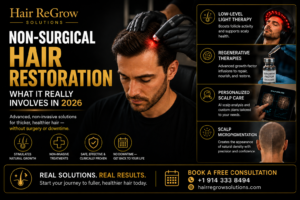
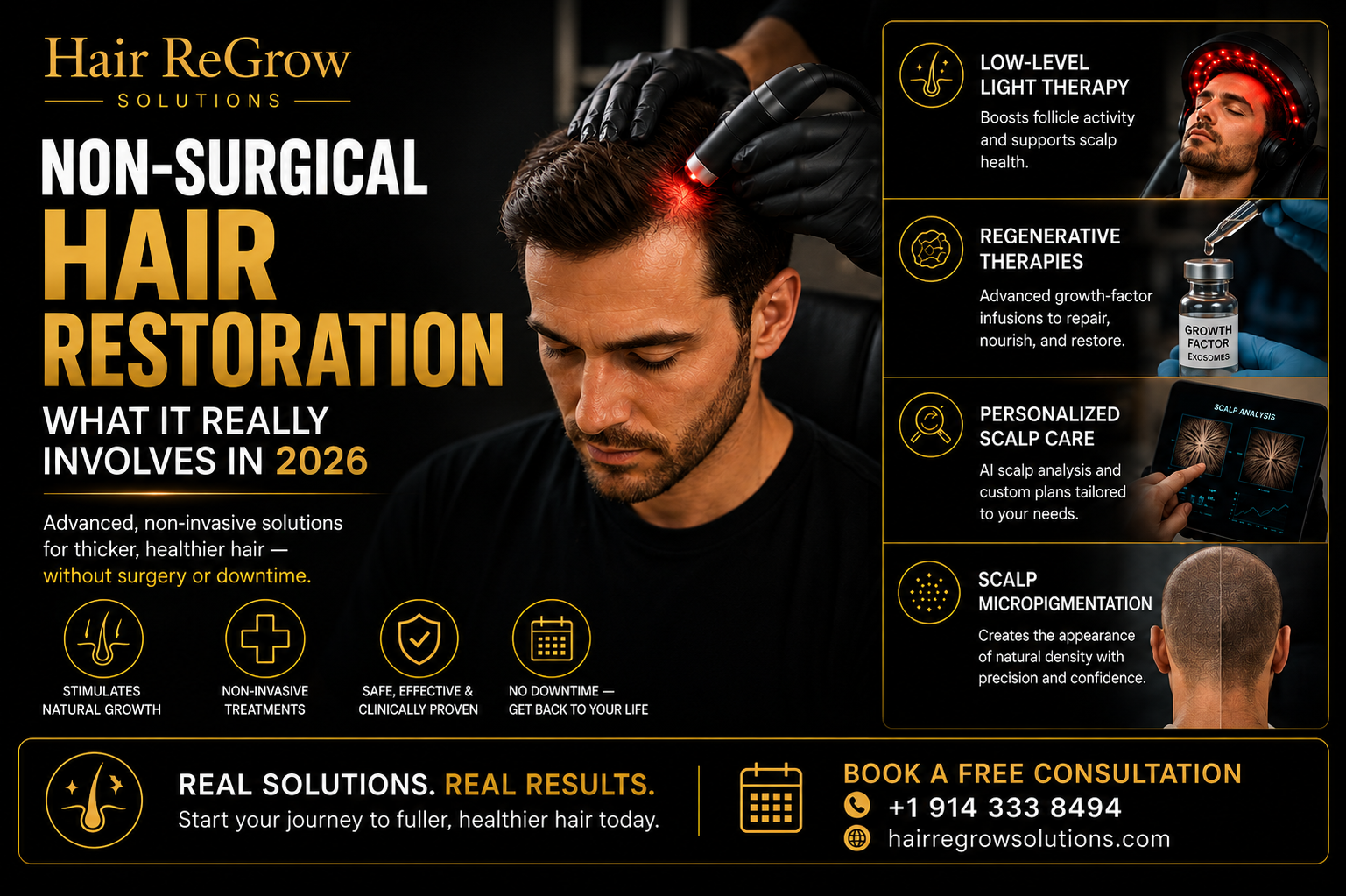
Popular options today include low-level light therapy (LLLT), advanced regenerative therapies (like exosomes), custom-compounded topicals, and scalp micropigmentation (SMP).
(For more on why people choose non-surgical over surgery, see this overview from the International Society of Hair Restoration Surgery.)
Key Non-Surgical Treatments and How They Work
Here are the most effective, evidence-based approaches in 2026:
-
1). Low-Level Light Therapy (LLLT / Red Light Therapy): Devices like clinical-grade helmets or caps emit safe, low-intensity red and near infrared light (typically 620-670 nm). The light penetrates the scalp and is absorbed by cells in the hair follicles. This boosts ATP (cellular energy), increases blood circulation, reduces inflammation, and helps follicles stay in the growth phase longer.
- The Routine: Sessions are usually 10 to 20 minutes a few times per week. Many see thicker, denser hair after 3 to 6 months of consistent use. It's completely non-invasive with no downtime -
2). Growth-Factor Infusions & Regenerative Therapies: While traditional PRP (Platelet-Rich Plasma) remains popular, 2026 has seen a massive shift toward Exosome therapy and advanced bio-peptides. Instead of drawing your blood, practitioners use highly concentrated, lab derived signaling molecules to "wake up" dormant follicles.
- The Goal: Delivered via ultra fine techniques for maximum comfort, these therapies improve follicle nutrition, repair cellular damage, and encourage significantly thicker, healthier growth Results build over 3–6 months with periodic sessions. -
Trichology Guided & Personalized Plans: The foundation of modern non-surgical care is abandoning the "one-size-fits-all" approach. Today, detailed consultations often utilize AI-driven scalp imaging and genetic testing to pinpoint your exact root causes whether that’s poor circulation, inflammation, or specific nutrient gaps.
- The Solution: Based on this data, specialists create a custom plan. This often includes custom compounded topicals (like advanced liposomal blends of minoxidil or finasteride that absorb better with fewer side effects) paired with clinical treatments for synergistic results. -
Scalp Micropigmentation (SMP): A precise, cosmetic tattoo technique deposits tiny pigment dots on the scalp to mimic natural hair follicles. It creates the illusion of shaved-head density or perfectly camouflages thinning areas and scars.
- The Process: It involves 2-4 sessions (spaced weeks apart) for layering and natural fading. There is no surgery, minimal discomfort, and the results look incredibly realistic when performed by skilled practitioners. Maintenance simply requires occasional touch-ups every 4 to 6 years.
Realistic Expectations & Timeline
- Results take time: Most people see noticeable improvement in 3-6 months, with peak results at 9-12 months.
- Consistency matters: These treatments work best with regular use/follow up.
- Not a "cure" for all: They excel at slowing loss, thickening existing hair, and improving appearance especially in early/moderate stages.
- No downtime: You can resume normal activities immediately.
Why Personalization Makes the Difference
Hair loss is highly individual, what works for one person may not for another. A thorough consultation (including scalp imaging and history review) uncovers your specific triggers and designs a plan that fits your life.
Many find this approach far more effective than one size fits all products.
If you’re ready to explore what’s possible for your hair without surgery, a personalized assessment is the best next step.
Ready to discover non-surgical options tailored to you?
Frequently Asked Questions
Is non-surgical hair restoration painful?
Most options are comfortable LLLT feels like gentle warmth, infusions use fine techniques, and SMP involves minor pinprick sensations (topical numbing helps).
How long do results last?
Maintenance varies: LLLT needs ongoing use to sustain benefits; SMP lasts 4–6 years with touch ups; regenerative treatments often provide longer-term thickening once stabilized.
Can I combine non-surgical treatments?
Yes,many people combine LLLT, growth-factor infusions, and SMP for synergistic results. A custom plan ensures safe, effective stacking.
Who is a good candidate?
Anyone with thinning, shedding, or early loss who wants to avoid surgery. It's especially helpful for diffuse thinning, female pattern loss, or post-stress recovery.
Are there side effects?
Side effects are rare and mild (temporary redness or sensitivity). Non-surgical methods are generally very safe when performed professionally.