
We spend a lot on shampoos, conditioners, and styling products hoping for thicker, healthier hair. But here’s the truth most people overlook: Your hair doesn’t grow from the ends it grows from the scalp.
If your scalp is inflamed, imbalanced, or lacking proper nourishment, even the most expensive hair products won’t deliver lasting results. In 2026, experts and dermatologists have shifted focus entirely to “scalp first” care treating the scalp with the same targeted attention we give facial skin (often called the “skinification” of haircare).
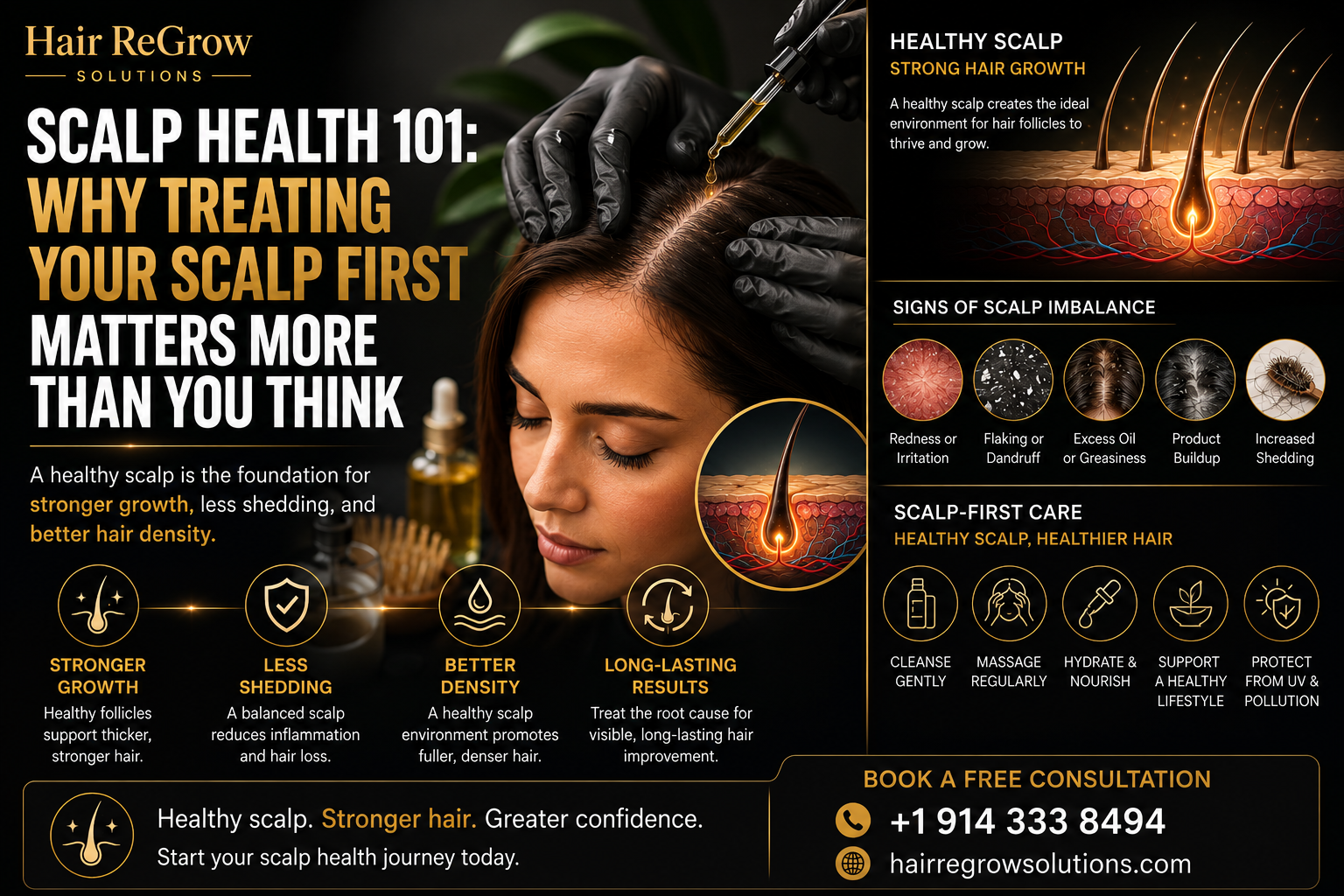
A healthy scalp creates the ideal environment for stronger growth, less shedding, and better density. In this post, we’ll explain why scalp health is your true foundation, highlight common signs of imbalance, share simple daily tips, and explore how addressing your scalp can make a very real difference in your hair loss journey.
Why the Scalp Is More Important Than You Think
Think of your scalp as the “soil” for your hair “plants.” Hair follicles live deep within the scalp, heavily relying on their surrounding environment to survive and thrive.
- Good blood circulation: To deliver vital oxygen and nutrients directly to the follicle.
- A balanced pH and microbiome: The community of beneficial bacteria and fungi that fight off pathogens and keep inflammation at bay.
- Proper moisture and barrier function: To prevent severe dryness, flaking, or excessive oil production.
When the scalp suffers due to stress, pollution, heavy product buildup, or poor care, the consequences for your hair are direct:
- It triggers inflammation: This is a primary driver of hair loss, pushing active follicles prematurely into the resting/shedding phases.
- It disrupts the microbiome: Leading to dandruff, intense itchiness, or severely weakened growth.
- It limits nutrient delivery: Resulting in thinner, brittle strands that break easily.
- Research consistently shows that treating the scalp first yields better, longer-lasting improvements than focusing only on the hair shaft.
Signs Your Scalp Needs Attention
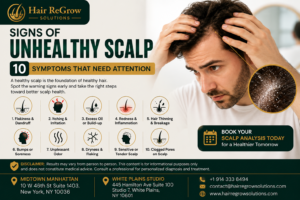
A healthy scalp feels completely comfortable and looks even in tone. If your “soil” needs tending, your body will usually let you know. Watch for these common red flags:
- Persistent itchiness, flaking, or redness.
- Excess oiliness (needing to wash daily just to look clean) or severe dryness.
- Heavy buildup (waxy product residue or trapped dead skin).
- Tightness, sensitivity, or mild acne like bumps.
- Increased shedding or slower growth, despite using good hair products.
If these symptoms persist, they often signal underlying inflammation, a microbiome imbalance, or poor micro circulation, all factors that directly stunt hair health.
Simple Daily Tips for a Healthier Scalp
You don’t need a complicated 10-step routine. Start with these simple, evidence-based habits:
- Cleanse Gently but Effectively: Use a mild, sulfate-free shampoo 3 to 5 times a week (or daily if you are highly active or naturally oily). Focus on massaging the scalp gently to remove buildup and excess sebum without completely stripping your natural protective oils.
- Massage Regularly: Spend 2 to 5 minutes daily massaging your scalp with your fingertips or a soft silicone tool. This significantly boosts blood circulation, naturally distributes oils down the hair shaft, and supports overall follicle health.
- Hydrate & Protect: Just like your face, your scalp needs hydration. Apply lightweight, non-greasy scalp serums (look for soothing ingredients like tea tree, peptides, or niacinamide) to maintain moisture balance. Avoid heavy styling waxes or dry shampoos that clog pores.
- Mind Your Lifestyle Factors: Manage your stress levels (high cortisol directly spikes scalp inflammation), eat a nutrient-rich diet (focusing on iron, zinc, and omega-3s), and protect your scalp from harsh UV rays and pollution with hats.
- Avoid Common Irritants Limit: tight hairstyles that pull on the follicles, space out harsh chemical treatments (like bleach or relaxers), and avoid turning the shower water too hot, which severely dries out the skin barrier.
The Power of Professional Insight
For many, at home care helps but deeper issues (hidden inflammation, poor circulation, microbiome shifts) need expert eyes. A thorough scalp evaluation (often with imaging tools) can uncover what’s really going on and guide targeted, non-surgical support.
Frequently Asked Questions
How is scalp health different from hair health?
Hair health refers to the visible, non-living strands (their strength, shine, and resistance to breakage). Scalp health is the living foundation. Its condition directly controls follicle function, growth cycles, and whether your hair has the ability to grow thick and strong in the first place.
Does a healthy scalp guarantee no hair loss?
Not always. Genetic or hormonal factors (like androgenetic alopecia) can still play a major role. However, a healthy scalp maximizes your genetic potential for regrowth, significantly slows progression, and improves your overall results from any hair restoration treatment.
How long until I see improvements from better scalp care?
Most people notice a massive reduction in irritation, flaking, and itching within 2 to 4 weeks. Visible changes in hair density and thickness typically take 3 to 6 months, as entirely new growth cycles emerge from the healthier environment.
Is the scalp microbiome really that important?
Yes. Emerging 2026 research confirms that a balanced microbiome regulates inflammation, fights harmful pathogens, and directly supports follicle health. Imbalances are strongly linked to chronic dandruff, thinning, and stalled growth.
Can I fix scalp issues at home, or do I need a professional?
Basic, consistent care helps immensely. But if you have persistent problems like chronic flaking, deep redness, or unexplained shedding, you will benefit from an expert analysis to identify the exact root cause rather than guessing with drugstore products.
Struggling with Hair Loss?
If scalp concerns are holding back your hair goals, a detailed check can reveal simple ways to turn things around.
Book Free Consultation Today →