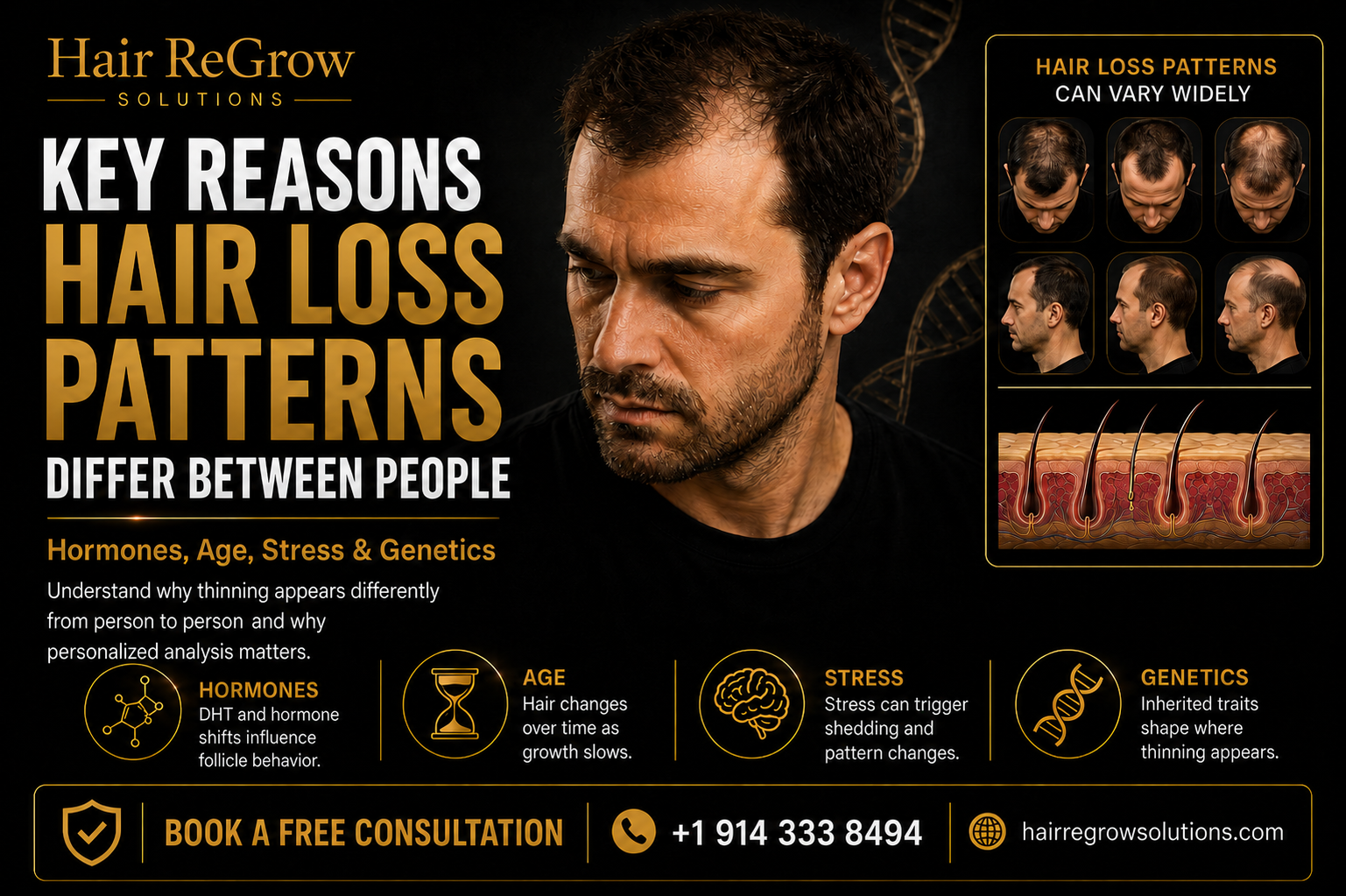

Hair loss patterns is rarely the exact same for everyone. Even within the same family, one person might develop a receding hairline, while another experiences overall diffuse thinning or sudden patchy spots.
Why the differences?
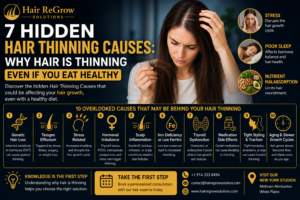
Your specific hair loss pattern is shaped by a complex mix of hormones, age, stress levels, genetics, and your individual biology. Understanding these underlying factors helps explain why your experience might look entirely different from your friend’s or relative’s and highlights exactly why a personalized, non surgical assessment is the key to actual regrowth.
Hair loss can occur due to multiple factors including genetics, hormonal imbalance, and scalp health conditions. According to the Mayo Clinic’s guide to hair loss causes, early diagnosis plays a critical role in preventing further thinning.
Modern non-surgical treatments are designed based on scalp biology and follicle stimulation. This aligns with clinical research published by the NIH, which highlights the importance of scalp environment in hair regrowth.
In this post, we’ll break down the main reasons hair loss patterns vary and what they mean for your restoration potential.
1) Hormones: The Biggest Driver of Pattern Differences
Hormones, especially androgens like dihydrotestosterone (DHT) (a byproduct of testosterone), play the leading role in the most common type of hair loss : androgenetic alopecia (pattern hair loss).
- In men: DHT-sensitive follicles shrink (miniaturize) faster in specific areas, temples, hairline, and crown leading to the classic "M" shape recession and bald spot. This often starts in the 20s–30s and progresses predictably (Norwood scale).
- In women: The same DHT sensitivity causes more diffuse thinning across the top and crown (widening part), while the frontal hairline usually stays intact. Estrogen helps protect follicles, so changes often accelerate after menopause or with conditions like PCOS when estrogen drops or androgens rise.
Other hormones, like thyroid hormones or insulin, add further variability. For example, a thyroid imbalance can cause widespread shedding across the entire scalp, but the exact pattern will shift based on your biological sex and the timing of the imbalance.
2) Age: When and How Patterns Emerge
- 20s to 30s: Early androgenetic alopecia often begins here due to genetic sensitivity. Men may start to see receding hairlines, while women might notice subtle changes in hair volume or experience postpartum shedding.
- 40s to 50s: Major hormonal shifts (like menopause in women and gradual testosterone changes in men) accelerate pattern loss. Thinning becomes much more visible, and overall density drops noticeably.
- 60+: "Senescent alopecia" (age related hair thinning) adds a layer of uniform thinning. As we age, follicles naturally produce finer, shorter hairs with less pigment. This generalized thinning overlays any earlier genetic patterns, making the hair loss look much more even and widespread.
3) Stress: How It Alters Patterns
Stress doesn’t cause just one “type” of hair loss. It triggers entirely different patterns depending on the intensity, duration, and your immune system’s response:
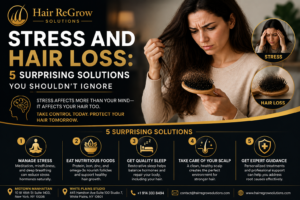
- Acute or Chronic Stress (Telogen Effluvium): High cortisol levels push up to 30% of your follicles into the resting phase all at once. This results in sudden, diffuse shedding all over the scalp that typically peaks 2 to 3 months after the stressful event. It is usually temporary and reversible once the stress is managed.
- Severe/Emotional Stress (Alopecia Areata): In susceptible individuals, extreme stress can trigger an autoimmune response where the body's immune system mistakenly attacks its own follicles. This results in sudden, patchy bald spots (usually round or oval).
- Ongoing Stress: Chronic stress worsens existing genetic patterns. It increases scalp inflammation and restricts blood flow, effectively speeding up androgenetic thinning.
4) Genetics, Ethnicity, and Other Factors
- Your inherited genetics dictate where your DHT sensitive follicles are located, but ethnicity also plays a highly documented role in prevalence and onset:
- Statistical Variations: Caucasian men have the highest rates of androgenetic alopecia; by age 50, up to 50% experience noticeable hair loss, reaching nearly 80% by age 70. In contrast, men of East Asian descent (such as Chinese and Japanese populations) experience significantly lower rates, often around 20% to 30% by age 50, with the onset typically occurring a decade later. Men of African descent generally fall between these two groups in terms of prevalence, while Native American populations have some of the lowest recorded rates of pattern baldness globally.
- Lifestyle & Environment: Factors like poor nutrition, heavy pollution, or tight hairstyles can alter these natural patterns. For instance, consistently wearing tight braids or ponytails creates "traction alopecia," causing distinct loss specifically around the edges of the hairline, regardless of genetics.
The Key Takeaway: Personalization Matters
Your hair loss pattern is your body’s unique story written by your hormones, age, stress levels, and genetics. That is exactly why generic, one-size-fits-all serums often fall short.
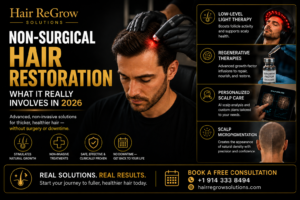
A detailed scalp evaluation (including modern trichoscopy imaging) reveals your specific pattern, uncovers the root causes, and allows us to map out the best non-surgical path forward whether that involves:
Low Level Light Therapy (LLLT)
Scalp Micropigmentation (SMP),
or a custom combination.
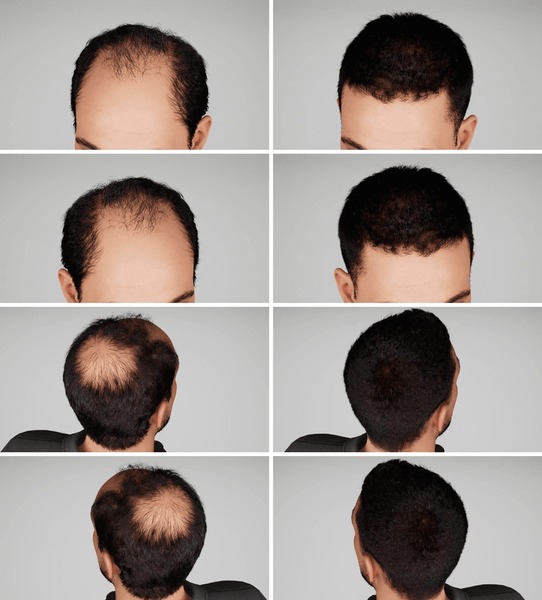
Understanding the root cause is essential. The American Academy of Dermatology explains hair loss causes in detail, including androgenetic alopecia, stress-related shedding, and scalp disorders.
Ready to understand your unique hair loss pattern?
Struggling with Hair Loss?
Get a personalized scalp analysis and treatment plan from experts in non-surgical hair restoration.
Book Free Consultation →Frequently Asked Questions
Can stress change a genetic pattern?
Genetics set the baseline sensitivity and timing. A stronger genetic DHT response means an earlier onset. Later in life, age-related changes (like menopause or slower cellular renewal) layer on top of that genetic baseline.
Why do some people lose hair early while others don't until much later?
The best hair loss treatment is one that is customized to your scalp condition, hair density, and goals. At Hair Regrow Solutions, we focus on non-surgical, personalized hair regrowth solutions designed to support long-term results.
Do hair loss patterns ever change over time?
Yes. Early temple receding can slowly progress to include a bald spot at the crown; an acute stressful event can overlay diffuse shedding on top of pattern baldness; and natural aging usually makes all thinning more uniform eventually.
How do I know what my specific pattern is?
Professional scalp imaging and trichology analysis map out your unique follicle distribution, assess inflammation, and identify the root causes. It is far more accurate than trying to diagnose yourself in the bathroom mirror.
Can non-surgical options help any pattern?
Yes! Early to moderate genetic patterns respond beautifully to stimulation therapies (like LLLT and advanced topicals), while treatments like SMP can add the permanent illusion of dense hair for later stages or patchy loss.