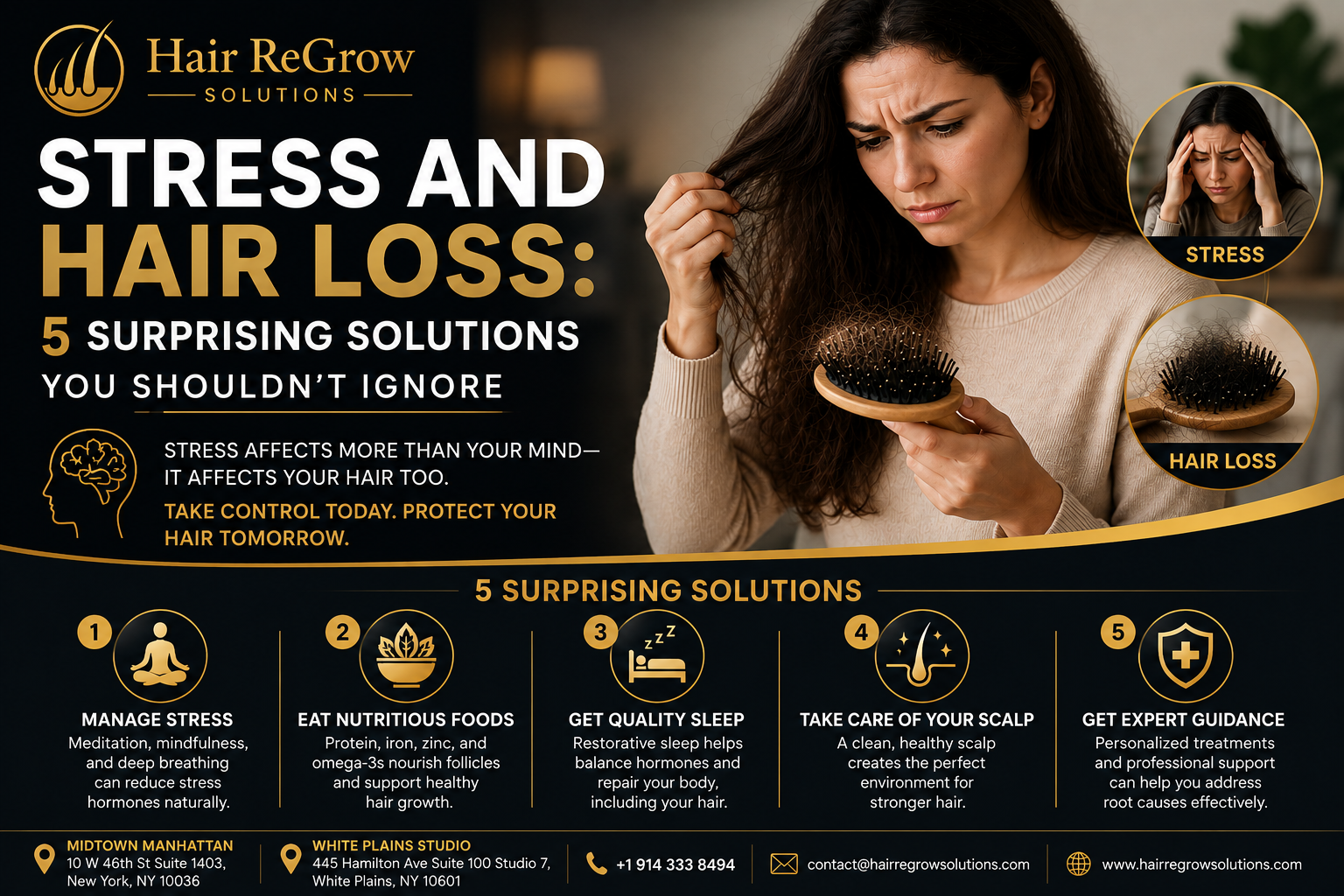

If you have noticed more hair in the shower, on your pillow, or in your brush during a stressful period, you are not alone. Many people search for answers when they suspect stress and hair loss may be connected, especially when shedding seems to happen suddenly or when hair feels thinner than usual.
The challenge is that stress does not affect everyone the same way. For some, it can trigger noticeable shedding. For others, it may worsen an existing scalp or hair concern that was already developing quietly over time. That is why understanding the root cause matters.
In this article, we will break down how stress can affect the hair cycle, what signs to look for, how stress related hair loss differs from other types of hair loss, and what non surgical options may help support scalp and hair wellness. The goal is simple: give you clear, educational information so you can make more informed decisions about next steps.
Why People Search for Stress and Hair Loss
- Most readers searching this topic are trying to answer one or more of these questions:
- Is stress causing my hair to fall out?
- Is my shedding temporary or something more serious?
- How do I know if this is telogen effluvium or another form of hair loss?
- Can hair grow back after stress related shedding?
- What treatments actually help without jumping to a transplant?
These questions usually come from worry, frustration, and uncertainty. Hair loss can feel personal and alarming, especially when it starts after a major life event, poor sleep, illness, burnout, or emotional strain.
How Stress Can Affect Hair Growth
Hair grows in cycles. Each follicle moves through a growth phase, a resting phase, and a shedding phase. Under normal conditions, only a portion of your hair sheds at a time. Stress can disrupt that balance.
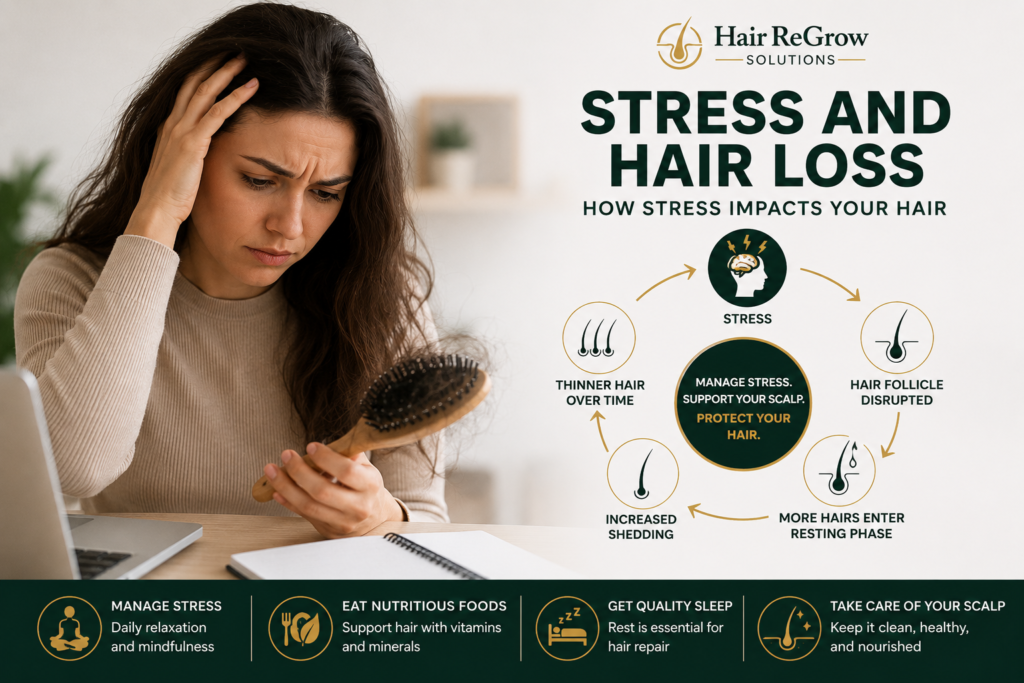
The connection between stress and the hair cycle
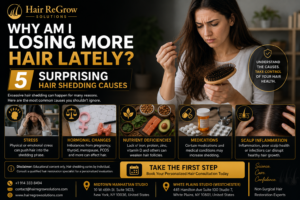
When the body is under significant physical or emotional stress, more follicles can shift into the resting phase earlier than expected. A few months later, this often leads to increased shedding. This pattern is commonly associated with telogen effluvium, one of the more recognized forms of stress related hair loss.
What role cortisol may play
Stress activates hormonal and inflammatory responses in the body. Cortisol is often discussed in this context because prolonged stress can affect multiple systems, including those involved in hair and scalp health. While cortisol is not the only factor, it is part of the larger stress response that may contribute to hair thinning from stress.
Important note about timing
Many people expect hair loss to happen immediately after a stressful event. In reality, shedding often appears 2 to 3 months later. That delay can make it harder to connect the dots.
Common Signs of Stress Related Hair Loss
Stress related hair loss often looks different from pattern hair loss or scarring conditions. Here are some of the more common signs:
-
Increased shedding:
You may notice more strands in the shower drain, on your pillow, or on your clothes. This is often one of the earliest signs. -
Overall thinning:
Instead of one patch or one receding area, the hair may look less dense throughout the scalp. -
Hair feels weaker:
Hair may feel more brittle, dry, or harder to style. -
Shedding after a stressful event:
A major move, job pressure, grief, surgery, illness, or emotional strain may precede the shedding. -
Scalp sensitivity or tension:
Some people report scalp tightness, itching, or discomfort, although these symptoms can also be linked to other scalp concerns.
Stress and Hair Loss vs Other Hair Loss Causes
Not all shedding is caused by stress. Understanding the difference matters because treatment planning should reflect the actual cause.
| Cause | Typical Pattern | Timing | Reversibility | Notes |
|---|---|---|---|---|
| Stress related hair loss | Diffuse shedding across the scalp | Often delayed by 2 to 3 months | Often improves if trigger is addressed | Commonly linked to telogen effluvium |
| Pattern hair loss | Gradual thinning at crown, hairline, or part | Progressive over time | Can be managed, not always fully reversed | Often genetic and hormone influenced |
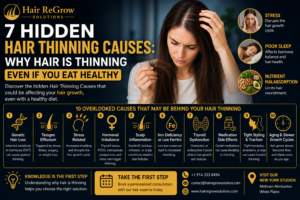
| Nutritional deficiency | Diffuse thinning or shedding | Varies | May improve after correction | Iron, protein, vitamin issues may contribute |
| Scalp inflammation | Itching, flaking, irritation, shedding | Can be ongoing | Depends on cause | Needs scalp focused evaluation |
| Medical illness or medication related shedding | Diffuse shedding | Often after illness or medication change | May improve once trigger resolves | Best reviewed with a clinician |
This comparison matters because a person may assume stress is the only issue when there are actually multiple contributors. For example, someone with early pattern hair loss may notice accelerated shedding during a high stress period. In that case, stress may be amplifying an existing condition rather than causing all of it.
Is Hair Loss From Stress Temporary?
In many cases, stress related shedding is temporary. That said, temporary does not always mean quick.
What recovery may look like
Once the trigger is reduced or resolved, many follicles gradually return to their usual cycle. New growth may become noticeable over several months, but visible density improvements can take time.
Why some people think it is not improving
Hair growth is slow. Even when shedding decreases, regrowth is not immediate. Small fine hairs may first appear before overall fullness returns.
When it may not be just stress
If shedding continues for longer than expected, if the pattern is becoming more pronounced, or if the scalp shows visible changes, another cause may be involved. In those cases, a scalp analysis can help identify whether inflammation, miniaturization, or another issue is present.
What Can Make Stress and Hair Loss Worse
Stress is often part of a larger picture. Other factors may increase the likelihood or intensity of shedding:
- Poor sleep: Sleep disruption can affect recovery, hormones, and overall body balance.
- Nutritional gaps: Low iron, low protein intake, or other deficiencies can affect hair strength and growth.
- Rapid weight loss: Sudden body changes can place additional strain on the hair cycle.
- Illness or surgery: Physical stress on the body can trigger temporary shedding.
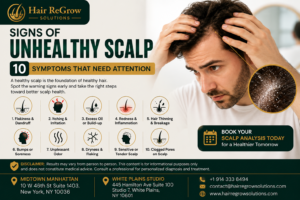
- Scalp inflammation: An unhealthy scalp environment may make hair look thinner and feel less resilient.
- Repeated styling stress: Heat, chemical processing, and tight hairstyles can add mechanical stress to already fragile hair.
What Helps Support Hair and Scalp Wellness
The best approach depends on the cause, but support usually works best when it is scalp first and root cause focused.
-
Reduce the stress load where possible :
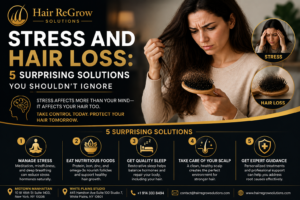
Stress management for hair loss may include better sleep habits, exercise, breathing practices, therapy, schedule changes, or lifestyle support. This is not a cure for hair loss, but it may help reduce an ongoing trigger. -
Support nutrition:
A balanced diet with adequate protein, iron, and key nutrients helps create a better foundation for hair growth. Supplementing without identifying a deficiency is not always the best strategy. -
Be gentle with the scalp and hair:
Avoid aggressive brushing, tight ponytails, heavy heat, or harsh chemical services if shedding is active. - Consider scalp focused care: If there is dandruff, inflammation, itch, or buildup, scalp wellness matters. Healthy hair growth starts with a healthy scalp environment.
-
Look at evidence informed non surgical options:
Depending on the individual, options may include:
These options are not one size fits all. Some are better suited for early thinning. Others are more about cosmetic support and appearance enhancement rather than regrowth. A consultation helps determine what is realistic.
Non Surgical Options for Stress Related Hair Shedding
| Option | Best For | Benefits | Limitations | Maintenance |
|---|---|---|---|---|
| Scalp analysis | Anyone unsure of the cause | Helps identify root causes and scalp conditions | Not a treatment by itself | Usually a starting point only |
| Hair and scalp wellness program | General scalp support | Can improve scalp habits and care consistency | Results depend on cause and commitment | Ongoing routine may be needed |
| LLLT | Early thinning and supportive care | Non invasive, comfortable for many users | Not ideal as a standalone solution for every case | Requires consistency |
| Growth factor treatments | Selected thinning concerns | May support a broader treatment plan | Suitability varies | Often part of a plan, not a single fix |
| SMP | Cosmetic density improvement | Creates the look of fuller density | Does not regrow hair | Touch ups may be needed over time |
When Stress and Hair Loss Needs Professional Attention
It is reasonable to monitor shedding for a short period if stress seems like the likely trigger. However, professional support may be helpful if:
- Shedding is heavy or ongoing
- Hair density is visibly dropping
- The scalp is itchy, red, or flaky
- You have a family history of thinning
- Hair loss started after illness, medication, or major physical stress
- You are not sure whether this is temporary or progressive
A professional scalp or hair assessment can help separate stress related shedding from pattern hair loss, inflammation, or other scalp issues. That distinction is important because the wrong approach can waste time and delay better care.
When to Monitor vs When to Get Assessed
| Situation | Reasonable Next Step |
|---|---|
| Mild shedding after a clear stressful period | Monitor for a few weeks and support healthy habits |
| Ongoing shedding for several months | Professional scalp analysis is advisable |
| Visible widening part or receding hairline | Evaluate for pattern hair loss |
| Itching, flaking, burning, or scalp discomfort | Assessment for scalp inflammation is useful |
| Sudden shedding after illness or medication | Review with a professional to identify the trigger |
Professional Insight
A lot of people focus only on the hair they are losing, but the scalp often tells a bigger story. In our experience, the most helpful first step is not guessing, but evaluating. A professional scalp analysis can show whether the concern is mainly stress related shedding, early pattern thinning, scalp inflammation, buildup, or a combination of factors.
That matters because support should match the problem. If the root cause is not clear, even good products or popular treatments may produce disappointing results. A consultation driven process helps create a more realistic plan and avoids unnecessary guesswork.
Conclusion
Stress and hair loss are closely connected, but the relationship is not always simple. Stress can trigger increased shedding, worsen scalp concerns, and make existing thinning more noticeable. In many cases, the issue is temporary, but the right next step depends on the underlying cause.
If you are seeing changes in shedding, density, or scalp comfort, the most practical move is to understand what is actually happening before choosing a solution. A scalp first approach can help guide more informed care and avoid wasted time on treatments that do not match the problem.
Frequently Asked Questions
Can stress and hair loss happen at the same time?
Yes. Stress can trigger or worsen shedding, especially when the body shifts more follicles into the resting phase. It may also amplify an underlying hair loss condition that was already present.
How long after stress does hair loss start?
Hair shedding often appears about 2 to 3 months after a stressful event. That delay is common and can make the trigger harder to identify.
Does hair grow back after stress related hair loss?
In many cases, yes, especially when the shedding is related to telogen effluvium. Regrowth is usually gradual and can take several months to become noticeable.
How do I know if my hair loss is from stress or something else?
Stress related shedding is usually diffuse and often follows a significant event. Pattern hair loss is more gradual and tends to affect certain areas like the crown or hairline. A scalp analysis can help clarify the difference
What is the best treatment for stress and hair loss?
There is no single best treatment for everyone. The best plan depends on the cause. Options may include stress reduction, nutritional support, scalp care, LLLT, growth factor treatments, or other non surgical hair restoration solutions.
Can anxiety cause hair thinning from stress?
Ongoing anxiety can contribute to stress related hair shedding by affecting sleep, hormones, and body balance. It may also make existing scalp or hair concerns feel more noticeable.
Should I use hair growth products right away?
Not always. If the cause is unclear, it is better to identify what is driving the shedding first. Some products may help support the scalp, but choosing them blindly can be ineffective.
Struggling with Hair Loss?
If you are unsure what is driving your shedding, consider a personalized scalp analysis and consultation. Understanding the root cause is often the best starting point for exploring non surgical options that fit your hair and scalp needs.
Book Free Consultation →