
If you are eating well but still noticing more hair in the shower drain, on your brush, or around your part line, you are not alone. Many people assume healthy eating should protect them from hair thinning, but the reality is more complex. Nutrition matters, but it is only one piece of the puzzle.
Hair thinning causes often involve a combination of scalp health, stress, hormones, genetics, illness, medications, and even styling habits. That is why two people with similar diets can experience very different hair changes.
In this article, we will break down the hidden reasons hair may thin even when your diet looks strong. You will learn what questions people usually have when they search for why hair is thinning, how to tell the difference between shedding and thinning, and why a scalp first assessment can be a smart next step before choosing any treatment.
Why Does Hair Thin Even When You Eat Healthy?
A balanced diet supports hair growth, but hair is not the body’s top priority. When the body is under stress, recovering from illness, dealing with hormonal shifts, or responding to inflammation, hair growth can slow down or shed more easily.
This is why hair thinning causes are rarely about one single issue. In many cases, diet may be good enough, but another underlying factor is driving the change.
Hair growth depends on more than nutrients
- Hair growth is influenced by:
- Genetics
- Hormones
- Scalp circulation
- Follicle sensitivity
- Inflammation
- Stress levels
- Sleep quality
- Illness or recovery
- Medication side effects
- Even if your meals are nutrient dense, one or more of these factors may still affect growth.
Hidden causes of hair thinning people often miss
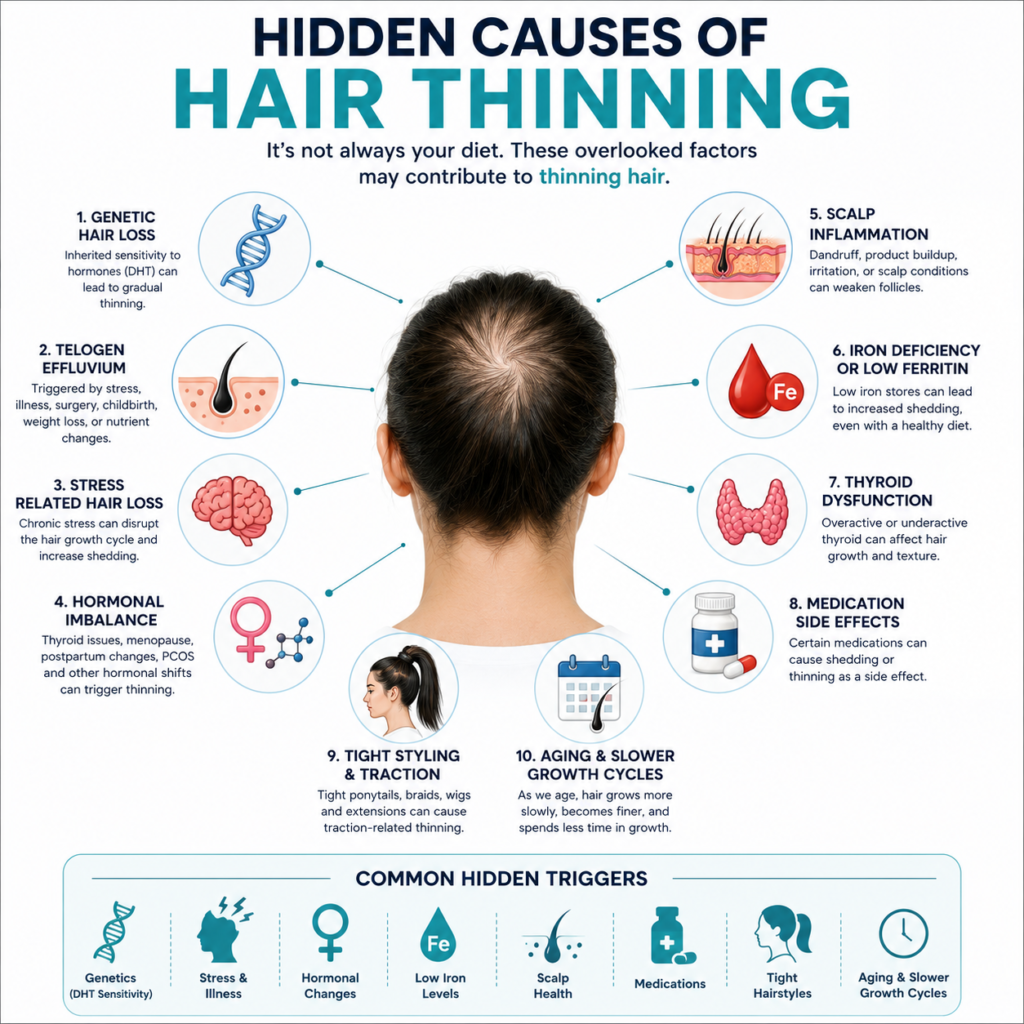
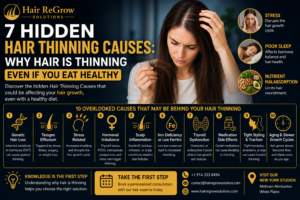
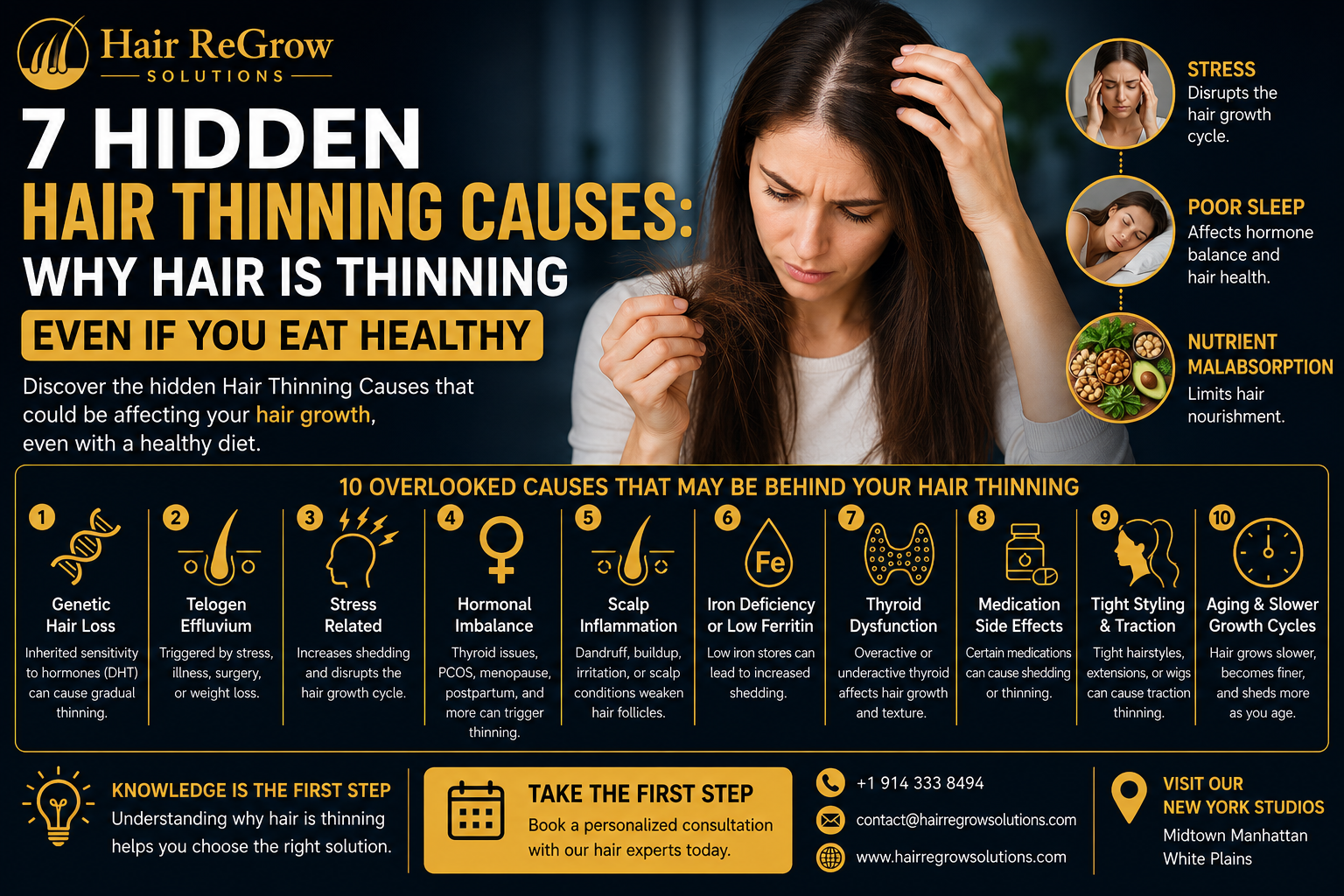
1. Genetic hair loss:
One of the most common hair thinning causes is androgenetic alopecia, also called pattern hair loss. This can affect both men and women, and it often begins gradually.
For men, thinning may appear at the temples or crown. For women, it may show up as a widening part or overall loss of density.
A healthy diet does not prevent genetic hair loss because the condition is driven largely by follicle sensitivity to hormones, especially DHT. Nutrition can support hair quality, but it does not change inherited follicle behavior.
2. Telogen effluvium:
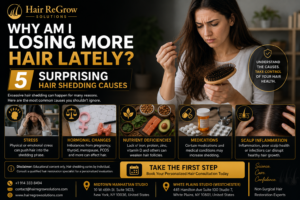
Telogen effluvium is a temporary shedding condition that often happens after a stressor. Common triggers include:
- Major emotional stress
- Illness or fever
- Surgery
- Rapid weight loss
- Childbirth
- Medication changes
- Nutrient changes
- Sleep disruption
People often search for hair thinning causes because they notice sudden shedding rather than gradual thinning. In telogen effluvium, hairs shift into a resting phase and shed more than usual. The good news is that this can improve when the trigger is addressed, but recovery takes time.
3. Stress related hair loss:
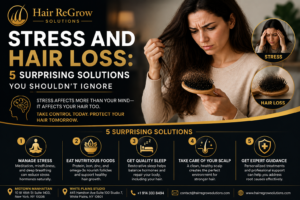
Stress does not just affect mood. It can disrupt the hair growth cycle, increase shedding, and worsen scalp tension or inflammation.
Chronic stress may also affect sleep, digestion, appetite, and hormone balance, which can indirectly influence hair health. If hair thinning started after a difficult period, stress may be part of the picture even if your diet remains strong.
4. Hormonal imbalance:
Hormones play a major role in how hair grows and sheds. Changes in thyroid function, menopause, postpartum recovery, polycystic ovary syndrome, or other endocrine shifts may contribute to thinning.
For women especially, hair thinning in women is often linked to hormonal changes that are easy to overlook. Healthy eating helps overall health, but it may not correct a hormone issue on its own.
5. Scalp inflammation:
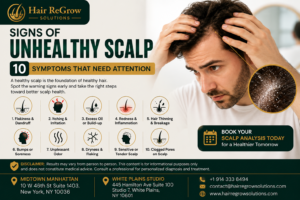
A healthy scalp is essential for healthy hair appearance and growth support. Inflammation can come from:
- Dandruff
- Seborrheic dermatitis
- Product buildup
- Irritation from harsh ingredients
- Itchy or flaky scalp conditions
- Tight hairstyles causing traction
Scalp inflammation may not always be obvious. Some people notice itching, soreness, or tenderness, while others only see more shedding and less density.
This is where scalp health matters as much as nutrition. If the scalp environment is irritated, follicles may not function optimally.
6. Iron deficiency or low ferritin:
A person can eat a generally healthy diet and still have low iron stores. This is especially common in people who menstruate, athletes, individuals with digestive issues, or those with a history of restrictive eating.
Iron deficiency hair loss is often discussed in search results because ferritin levels can influence shedding and growth support. A balanced diet helps, but some people still need lab work and medical guidance to identify low stores.
6. Iron deficiency or low ferritin:
A person can eat a generally healthy diet and still have low iron stores. This is especially common in people who menstruate, athletes, individuals with digestive issues, or those with a history of restrictive eating.
Iron deficiency hair loss is often discussed in search results because ferritin levels can influence shedding and growth support. A balanced diet helps, but some people still need lab work and medical guidance to identify low stores.
A person can eat a generally healthy diet and still have low iron stores. This is especially common in people who menstruate, athletes, individuals with digestive issues, or those with a history of restrictive eating.
Iron deficiency hair loss is often discussed in search results because ferritin levels can influence shedding and growth support. A balanced diet helps, but some people still need lab work and medical guidance to identify low stores.
Both underactive and overactive thyroid conditions can affect hair texture, growth, and shedding. Hair may become drier, thinner, or more fragile.
Because thyroid symptoms can be subtle, people sometimes focus only on hair and overlook the broader picture. If fatigue, weight changes, cold sensitivity, or mood shifts are also present, thyroid evaluation may be worth discussing with a healthcare professional.
8. Medication side effects:
Certain medications can contribute to shedding or thinning. Examples may include some:
- Blood pressure medications
- Antidepressants
- Acne medications
- Retinoids
- Blood thinners
- Hormonal medications
If hair changes begin after starting a medication, do not stop it on your own. A clinician can help assess whether the timeline makes sense and whether alternatives exist.
9. Tight styling and traction:
Repeated tension from tight ponytails, braids, buns, extensions, or wigs can place stress on the hairline and scalp. Over time, this may lead to traction-related thinning.
This is especially important for people who search why hair is thinning and assume the issue is internal only. Sometimes the cause is mechanical, and reducing tension can be an important part of the solution.
10. Aging and slower growth cycles:
As people get older, hair may grow more slowly, become finer, and spend less time in the active growth phase. This is a normal part of aging, but it can still feel concerning.
Healthy eating remains valuable, yet age related changes may still create noticeable thinning. In these cases, support often focuses on scalp health, density preservation, and realistic expectations.
Hair shedding vs hair thinning: what is the difference?
Many people use these terms interchangeably, but they are not exactly the same.
- Shedding means hair is falling out more than usual
- Thinning means overall density is decreasing or individual strands appear less full
Shedding can sometimes be temporary and recoverable. Thinning may point to a longer term change in follicle activity, miniaturization, or ongoing scalp stress.
Signs you may be dealing with shedding:
- More hairs in the shower or brush
- Sudden increase in loose strands
- Hair coming out from all over the scalp
Signs you may be dealing with thinning:
- Wider part line
- Less ponytail volume
- More visible scalp
- Receding hairline or crown thinning
- Overall reduced density
Why healthy eating alone may not solve the problem
Nutrition supports the building blocks of hair, but hair thinning causes are often layered. If the follicles are genetically sensitive, inflamed, hormonally affected, or recovering from stress, the hair may still thin despite a strong diet.
Healthy eating is helpful, but it is not always enough when:
- The cause is internal and not nutritional
- The scalp is inflamed
- Stress is ongoing
- Hormones are shifting
- The issue is genetic
- The shedding trigger happened months ago
That is why a scalp first approach can be useful. It helps identify what is actually happening before guessing at solutions.
What Does Different Hair Thinning Look Like?
| Possible Cause | Typical Pattern | Common Clues | Often Temporary? | Notes |
|---|---|---|---|---|
| Genetic hair loss | Gradual thinning at part, crown, or hairline | Family history, slower regrowth | No, usually progressive | Early support may help preserve density |
| Telogen effluvium | Diffuse shedding across scalp | Recent stress, illness, childbirth, weight loss | Often yes | Can improve once trigger resolves |
| Hormonal imbalance | Diffuse thinning or pattern changes | Menstrual changes, menopause, thyroid symptoms | Sometimes | Needs evaluation for root cause |
| Scalp inflammation | Shedding with itch, flakes, irritation | Redness, buildup, tenderness | Depends | Improving scalp environment may help |
| Iron deficiency | Shedding, weaker strands | Fatigue, low ferritin, dietary gaps | Often yes with correction | Lab work may be needed |
| Traction hair loss | Thinning around hairline or temples | Tight styles, extensions, repeated tension | Early stages can improve | Long term damage can become harder to reverse |
What hair restoration solutions can be considered
The right approach depends on the cause, stage of thinning, and scalp condition. For some people, the first step is simply understanding whether the issue is shedding, thinning, inflammation, or pattern loss.
Scalp analysis
- A scalp analysis can help identify:
- Buildup
- Redness
- Flaking
- Follicle visibility
- Density changes
- Pattern of loss
- Signs of irritation or imbalance
- This is often a helpful starting point because it informs next steps instead of relying on guesswork.
These programs may focus on improving the scalp environment, reducing irritation, and supporting better care habits. They can be especially relevant when the issue seems related to product use, buildup, or scalp sensitivity.
Some non surgical hair restoration plans may include growth factor based approaches. These are typically considered in the context of overall scalp condition and individual goals, and they are not the same for every person.
Low level light therapy, also called LLLT, is sometimes used as part of a broader hair support plan. It may be more appealing for people who want a non-invasive option, though results and consistency requirements vary.
Scalp micropigmentation, or SMP, is a cosmetic option that can create the appearance of fuller density or a more defined hairline. It does not regrow hair, but it can be useful for visual coverage in suitable cases.
Which Non-Surgical Hair Restoration Option Is Right for You?
| Option | Best For | Comfort Level | Maintenance | Key Limitation |
|---|---|---|---|---|
| Scalp analysis | Identifying the issue | Very comfortable | One time or periodic | Not a treatment by itself |
| Wellness program | Scalp care support | Generally comfortable | Ongoing | Results depend on cause |
| LLLT | Some thinning patterns | Mild, non invasive | Consistent use needed | Requires regular commitment |
| Growth factor treatments | Selected candidates | Varies by protocol | Periodic sessions | Not ideal for everyone |
| SMP | Cosmetic density appearance | Moderate tolerance | Touch ups may be needed | Does not regrow follicles |
How to think about treatment suitability?
- Not every solution fits every person. For example:
- A person with temporary shedding may need trigger management rather than cosmetic coverage
- A person with pattern thinning may benefit from a long term plan focused on preservation
- A person with scalp irritation may need the scalp addressed before any hair support strategy
- A person who wants a visual improvement without surgery may consider SMP or LLLT
- A person with advanced thinning may need realistic expectations about maintenance and outcomes
- Age, lifestyle, budget, comfort level, and how quickly someone wants visible change all matter.
Cost considerations :
- Scalp analysis is often a lower entry point because it clarifies the problem first
- LLLT may require device or program investment plus consistency
- Ongoing wellness plans usually require regular maintenance
- SMP can involve a one time series plus future touch ups
- Some options may look less expensive upfront but require more maintenance over time
Professional Insight
A professional scalp or hair assessment can be helpful when hair thinning continues for more than a few months, seems to be worsening, or does not match your expectations based on diet alone.
This is especially valuable when the cause is not obvious. A trained assessment can help identify whether the issue looks more like shedding, pattern thinning, scalp inflammation, or a mix of factors. That matters because the most effective next step depends on the root cause.
For many people, the biggest mistake is starting treatment before understanding what the scalp and follicles are actually doing.
Conclusion
Hair thinning can happen even when your eating habits are strong because nutrition is only one part of the picture. Genetics, stress, hormones, scalp inflammation, iron status, medication changes, and styling habits can all play a role.
The key takeaway is simple: before choosing a solution, understand the cause. A scalp first evaluation can help separate temporary shedding from ongoing thinning and guide a more informed, personalized plan.
If you are noticing changes and want clarity, start with a professional scalp analysis and a consultation focused on root cause identification, not guesswork.
Frequently Asked Questions
Why is my hair thinning even though I eat healthy?
Healthy eating supports hair, but it does not rule out genetic hair loss, stress related shedding, hormone changes, scalp inflammation, iron deficiency, or medication side effects. Hair thinning causes are often multi factor.
Can stress cause hair thinning even if my diet is good?
Yes. Stress can shift hair into a shedding phase and may also affect sleep, hormones, and scalp health. Even with good nutrition, ongoing stress can still contribute to visible thinning.
How do I know if I have shedding or true thinning?
Shedding usually means more hair is falling out than normal. Thinning means density is decreasing or the part line is widening. If you are unsure, a scalp analysis can help clarify what is happening.
Does healthy eating stop genetic hair loss?
Healthy eating supports overall hair quality, but it does not stop pattern hair loss on its own. Genetic hair loss is influenced by follicle sensitivity and usually needs a broader strategy.
What are the most common hidden hair thinning causes?
Common hidden causes include telogen effluvium, hormonal imbalance, low iron stores, scalp inflammation, traction from tight styles, thyroid changes, stress, and medication related shedding.
Is hair thinning in women different from hair thinning in men?
Yes, often. Men more commonly notice temple or crown recession, while women often notice part widening or diffuse thinning. The underlying causes can overlap, but patterns and treatment priorities may differ.
When should I get a professional scalp assessment?
If thinning is persistent, sudden, worsening, itchy, flaky, or affecting your confidence, a professional scalp assessment is a practical next step. It can help identify the cause before you choose a treatment path.
Ready to understand your unique hair loss and Thinning pattern?
Struggling with Hair Loss?
If you are unsure why your hair is thinning, consider starting with a scalp analysis and personalized consultation. Understanding the root cause can help you explore non surgical options in a more informed and realistic way.
Book Free Consultation →