

Hair Shedding Causes are often the first thing people search for when they suddenly notice more hair on their pillow, in the shower drain, or tangled in their brush. If you’ve been asking yourself,
“Why am I losing more hair lately?”
know that you’re far from alone. It is one of the most common concerns people have when hair shedding becomes more noticeable.
It’s completely understandable to feel worried or frustrated, but the encouraging news is that many cases of increased hair shedding are temporary and linked to reversible triggers. Identifying the underlying cause is the first step toward restoring confidence and taking control of your hair health.
In this guide, you’ll learn about the hair growth cycle, discover the most common hair shedding causes in 2026, recognize important warning signs, and explore practical next steps to support healthier hair growth.
How Hair and Sheds Normally Grows?
Hair follows a natural cycle with three key phases:
- Anagen (Growth Phase): 85 to 90% of hairs actively grow (lasting 2 to7 years).
- Catagen (Transition Phase): A brief resting period where the follicle shrinks (lasting 2 to 3 weeks).
- Telogen (Resting/Shedding Phase) : 10 to15% of hairs rest before falling out (about 3 months), then new growth begins.
You typically shed 50 to 100 hairs per day as part of this normal renewal. When a specific trigger pushes a large number of hairs into the telogen phase all at once, shedding becomes highly noticeable about 2 to 3 months later. This is called telogen effluvium, a very common and often reversible type of hair loss.
For more details, see this overview from the American Academy of Dermatology.
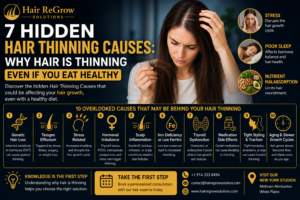
The Most Common Causes of Increased Shedding
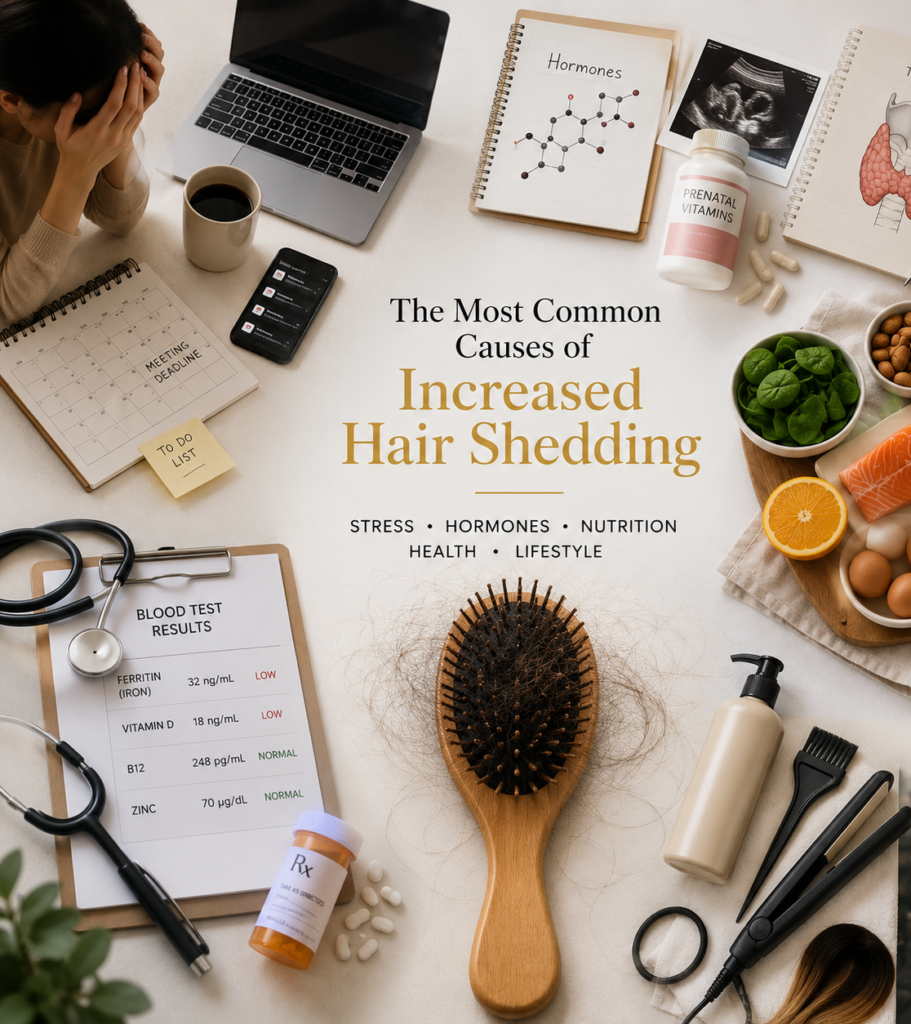
Here are the leading reasons, based on trusted medical sources:
-
Stress (Physical or Emotional):
High stress from work, major life events, illness, or surgery elevates cortisol and can shift a massive amount of hair into the resting phase. Because of the hair cycle, shedding often peaks 2 to 3 months after the stressful event. In today's fast-paced world, this remains one of the biggest contributors to sudden thinning.
More on telogen effluvium from the Cleveland Clinic.
-
Hormonal Changes & Imbalances:
Pregnancy, postpartum recovery, menopause, thyroid conditions, PCOS, or starting/stopping birth control frequently cause temporary shedding. Alternatively, androgenetic alopecia (pattern thinning) is the most common long-term type of hormonal hair loss. It is usually gradual, presenting as a receding hairline or thinning crown in men, and a widening part or diffuse thinning in women.
Read Detailed causes from the Mayo Clinic.
-
Nutritional Deficiencies:
Low levels of iron, vitamin D, zinc, protein, or B vitamins can starve and weaken your follicles. Crash diets, rapid weight loss, or highly restrictive eating plans are notorious for triggering telogen effluvium. -
Medications & Medical Conditions:
Extra shedding can be a side effect of certain prescription drugs (e.g., blood pressure medications, antidepressants, or acne treatments). It can also be caused by autoimmune issues like alopecia areata, scalp infections, or post-viral inflammation. -
Lifestyle & Environmental Factors
Consistently wearing tight hairstyles (traction alopecia), using harsh chemical treatments, environmental pollution, or poor scalp hygiene can severely stress the hair shaft and follicle over time.
Note: These causes frequently overlap. For example, severe stress can disrupt your digestion and nutrient absorption, compounding the shedding effect.
When Should You Be Concerned? Key Red Flags
- While losing up to 100 hairs a day is normal, you should seek professional insight if you notice:
- While losing up to 100 hairs a day is normal, you should seek professional insight if you notice:
- Smooth, completely bald patches.
- Specific thinning patterns (e.g., a rapidly receding hairline or a noticeably wider part).
- Accompanying physical symptoms like deep fatigue, sudden weight changes, or intense scalp itching and redness.
- Heavy shedding that lasts longer than 3 to 6 months.
- If several of these sound familiar, a quick professional scalp check can provide real peace of mind. Don't wait if it's affecting your confidence!
The Path Forward: Hope and Next Steps
The vast majority of sudden shedding is highly reversible. Once the underlying trigger is addressed whether through lifestyle tweaks, nutritional support, or professional treatments hair often regrows fully.
In 2026, we no longer have to guess. Many find answers through a detailed, AI-assisted scalp evaluation. This goes far beyond the surface to assess micro-circulation, hidden inflammation, and overall follicle health revealing the exact hidden contributors that everyday observation misses.
Frequently Asked Questions
How much hair loss is normal every day?
Shedding 50 to 100 hairs per day is perfectly normal. However, pulling out clumps or noticing significantly more hair in the drain may signal telogen effluvium or another underlying trigger.
Will my hair grow back after stress-related shedding?
Yes! In most telogen effluvium cases, hair fully regrows within 6 to 12 months once the stressor is resolved. Taking early action to support your scalp can help speed up this recovery.
Is sudden hair loss always permanent?
No, most sudden shedding is temporary. Progressive pattern loss (like male or female pattern baldness) is the type that becomes more permanent if left untreated over several years.
Can scalp health issues cause extra shedding?
Absolutely. Inflammation, poor circulation, or buildup can weaken follicles and push more into shedding. Professional assessment often uncovers these factors.
When should I see a specialist instead of waiting?
If shedding persists beyond 3 months, shows patches/patterns, or comes with other symptoms (fatigue, irritation), get evaluated sooner for clarity and options.
Ready to get clarity on your hair?
Have you noticed similar changes? Feel free to share in the comments. We're here to help.
Book Free Consultation Today →