
If you’re exploring ways to support hair regrowth without surgery or strong medications, you’ve likely come across low-level light therapy (LLLT) also known as red light therapy for hair.
In 2026, LLLT continues to gain attention thanks to strong clinical evidence: recent 12-month studies show sustained increases in hair density (up to +25 hairs/cm²) and thickness (+15%), with high satisfaction and no major side effects. It’s non-invasive, comfortable, and fits busy lifestyles making it a popular choice for early or moderate hair concerns.
In this post, we’ll explain exactly how LLLT works, its key benefits, who tends to see the best results, realistic timelines, and why combining it with professional guidance often maximizes outcomes.
How Low-Level Light Therapy Works for Hair
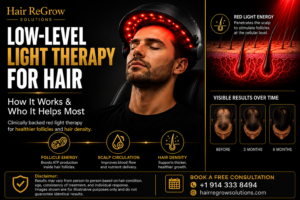
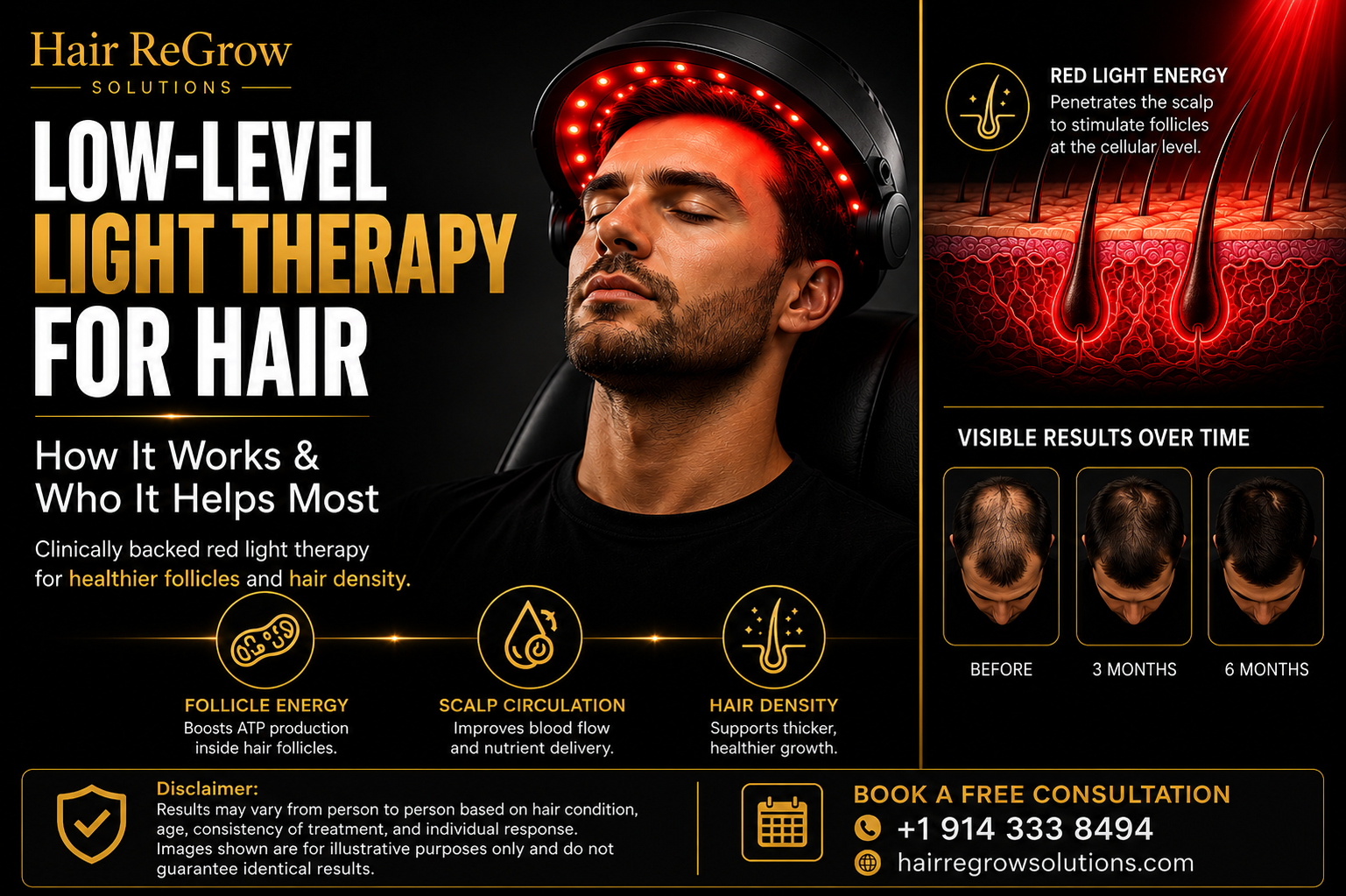
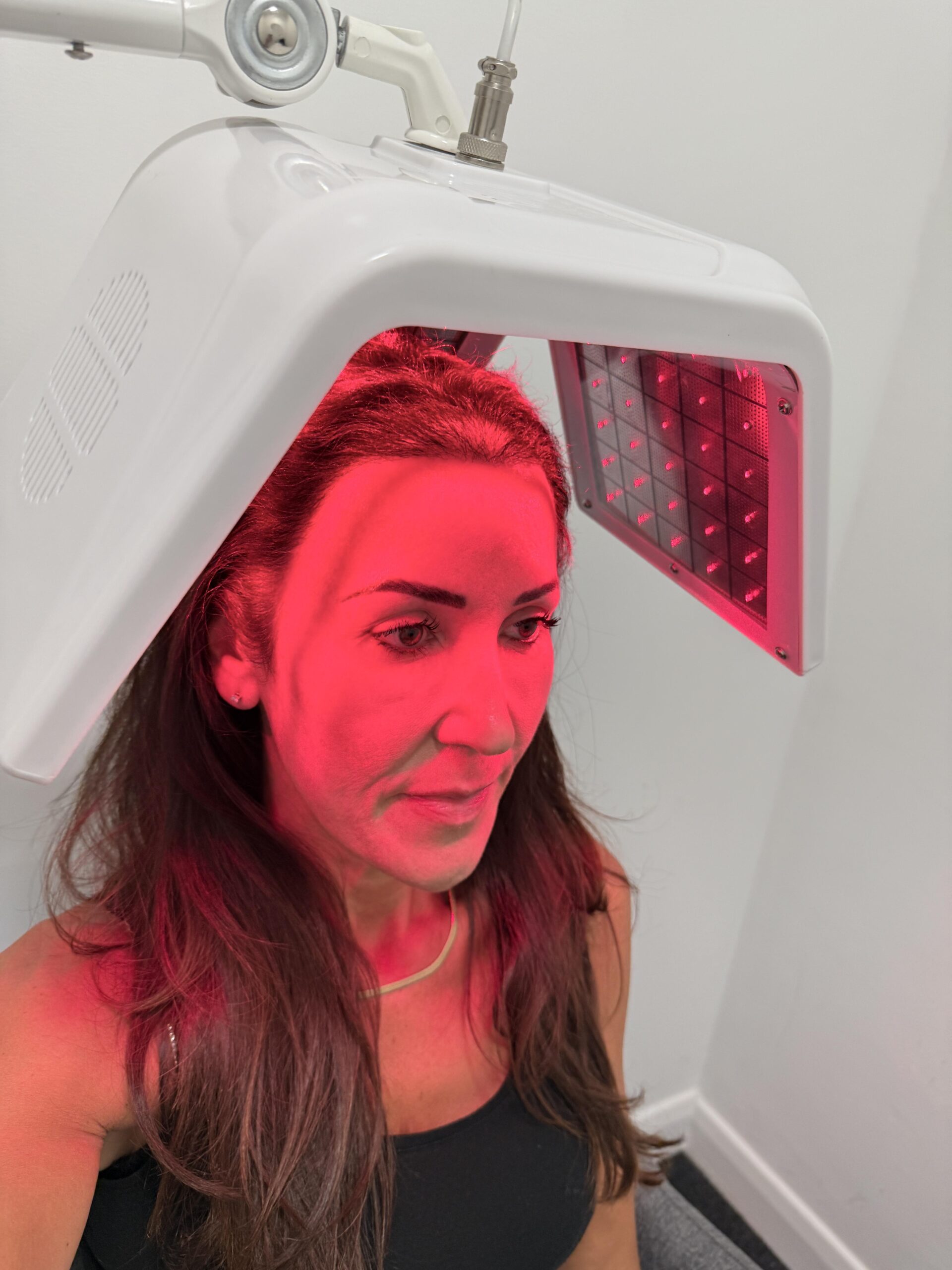
LLLT uses safe, low intensity red or near-infrared light (typically 620–675 nm) from devices like helmets, caps, or combs. The light penetrates the scalp (a few millimeters deep) and is absorbed by cells in the hair follicles specifically the mitochondria (the “power plants” of cells).
- This absorption boosts production of ATP (cellular energy), which:
- Increases blood flow and nutrient delivery to follicles.
- Reduces inflammation around hair roots.
- Helps follicles stay longer in the active growth (anagen) phase.
- Can reactivate dormant or miniaturized follicles.
- Unlike high power lasers, LLLT is gentle no heat, no damage, no downtime. Sessions are usually 10–25 minutes, several times per week.
Key Benefits Backed by Recent Research
- Studies from 2025–2026 (including long-term home-use trials) highlight consistent advantages:
- Increased Hair Density & Thickness: 12 month data shows average +25 hairs/cm² density and +15% shaft thickness, with gains across genders and severity levels.
- Slows Progression: Helps maintain existing hair longer, especially in androgenetic alopecia (pattern thinning).
- Improves Scalp Environment: Reduces inflammation and supports better follicle health.
- High Tolerability: No reported serious side effects; most users find it relaxing (like gentle warmth).
- Convenient & Safe: FDA cleared devices available; can complement other non-surgical approaches.
- Results build gradually most noticeable after 3–6 months of consistent use, peaking around 9–12 months.
Who Benefits Most from LLLT ?
- LLLT tends to work best for:
- Early to moderate androgenetic alopecia (male/female pattern thinning).
- Diffuse shedding or telogen effluvium (e.g., post-stress, postpartum, nutritional).
- People seeking preventive support or maintenance after other treatments.
- Those who want no-downtime, at-home compatible options (with clinic oversight for best results).
- It's less effective for advanced baldness (fully dormant follicles) or certain scarring alopecias—making early intervention key.
Realistic Expectations & Tips for Success
- Timeline: Visible changes often start at 3–6 months; full benefits at 9–12 months with adherence.
- Consistency: 3–5 sessions/week is typical; skipping reduces results.
- Combination Power: Pairs well with scalp care, nutrition, or other therapies (e.g., growth-factor infusions) for amplified effects.
- Monitoring: Tracking progress (photos, density measurements) helps stay motivated.
- Professional guidance ensures you're using the right protocol and combining it effectively.
Clinical Insight: Low-Level Light Therapy (LLLT) can support healthier hair growth by stimulating follicles and improving scalp circulation. Studies from 2025–2026 suggest stronger results when LLLT is combined with professional growth factor therapies and personalized scalp care plans.
Frequently Asked Questions
Is LLLT the same as red light therapy for skin?
Yes it's the same technology (photobiomodulation), but devices for hair target scalp-specific wavelengths and coverage.
Are there any side effects?
Extremely rare and mild (temporary warmth or slight tingling). No serious risks reported in long-term studies.
Do I need to use it forever?
Maintenance (reduced frequency) often sustains gains, similar to skincare routines. Stopping may have slow benefits over time.
Can LLLT replace minoxidil or other treatments?
It can complement them some studies show similar efficacy to minoxidil for density gains, with fewer side effects.
Is clinic LLLT better than at-home devices?
Clinic versions often use stronger, monitored protocols combined with diagnostics/tracking for personalized, faster results.
Ready to explore low-level light therapy for your hair?
If you’re curious whether LLLT could support your hair goals, a consultation can assess your scalp and recommend the best approach.